Sickening video emerged as Muslims celebrate holy festival Eid al-Adha
Shows prisoners having their throats cut in a slaughter house in Syria
Men are seen hanging upside down from meat hooks in gruesome film
Video features clips from the movie Mission: Impossible – Rogue Nation
Sickening footage shows men hanging upside down by their feet from meat hooks while they await execution
ISIS has marked Eid by hanging prisoners upside down from meat hooks and ‘butchering them like sheep’ in a gruesome new execution video.
In one sickening scene, men accused of being US spies are filmed having their throats cut in a slaughter house in Deir ez-Zor, north-eastern Syria.
The video, named ‘The Making of Illusion’ was released on the first day of the Muslim holy time of Eid al-Adha and, bizarrely, features short clips showing actors Simon Pegg and Tom Cruise in the 2015 movie Mission: Impossible – Rogue Nation.
ISIS has marked Eid by hanging dozens of prisoners upside down from meat hooks and ‘butchering them like sheep’ in a gruesome new execution video. An executioner can be seen brandishing a large knife
The footage was included in a montage of films supposedly intended to represent spy activity. ISIS uses the video to mock foreign intelligence services, it has been reported.
Abu Mohammed, founder of the human rights group ‘Raqqa is Being Slaughtered Silently’, described the grisly film as ‘the worst video we saw’ and that humans were butchered ‘like sheep’.
At one point in the film, an executioner wearing a white outfit carries two prisoners on each arm through the slaughter house before slitting their throats over a metal grate where, normally, the blood of slaughtered animals would drain away.
Graphic footage also shows them hanging upside down by their feet from meat hooks with their throats cut while others awaiting execution are hoisted up in the same position.
At one point in the film, an executioner wearing a white outfit carries two prisoners on each arm before slitting their throats over a metal grate where the blood of slaughtered animals would usually drain away
The executioner can be seen brandishing a huge knife as prisoners, dressed in orange, are bundled into the slaughter house with their hands tied behind their back
The executioner can be seen brandishing a huge knife as prisoners, dressed in orange, are bundled into the slaughter house with their hands tied behind their backs.
The 12-minute video also features images of past ISIS executions as well as recent terror atrocities.
Photos of the Eiffel Tower in Paris are used along with images from the aftermath of the Nice terror attack in July in which an ISIS inspired fanatic driving a truck murdered scores of people celebrating Bastille Day.
The 12-minute video also features images of past ISIS executions as well as recent terror atrocities
The video was released as Muslims around the world celebrated Eid al-Adha.
The holy festival, also known as the ‘feast of sacrifice’ commemorates the willingness of the Prophet Ibrahim – also known as Abraham to Christians and Jews – to sacrifice his son before God stayed his hand.
During the three-day holiday – which began yesterday – livestock is slaughtered and part of the meat is distributed to the poor.
The movement has won over Hillary Clinton and Bernie Sanders. But what if its claims are fiction.
A television ad for Hillary Clinton ’s presidential campaign that aired in South Carolina showed the candidate declaring that “too many encounters with law enforcement end tragically.” She later adds: “We have to face up to the hard truth of injustice and systemic racism.”
Her Democratic presidential rival, Bernie Sanders, met with the Rev. Al Sharpton earlier in February this year. Mr. Sanders then tweeted that “As President, let me be very clear that no one will fight harder to end racism and reform our broken criminal justice system than I will.” And he appeared on the TV talk show “The View” saying, “It is not acceptable to see unarmed people being shot by police officers.”
Apparently the Black Lives Matter movement has convinced Democrats and progressives that there is an epidemic of racist white police officers killing young black men. Such rhetoric was going to heat up as Mrs. Clinton and Mr. Sanders courted minority voters before the Feb. 27 South Carolina primary.
But what if the Black Lives Matter movement is based on fiction? Not just the fictional account of the 2014 police shooting of Michael Brown in Ferguson, Mo., but the utter misrepresentation of police shootings generally.
To judge from Black Lives Matter protesters and their media and political allies, you would think that killer cops pose the biggest threat to young black men today. But this perception, like almost everything else that many people think they know about fatal police shootings, is wrong.
The Washington Post has been gathering data on fatal police shootings over the past year and a half to correct acknowledged deficiencies in federal tallies. The emerging data should open many eyes.
For starters, fatal police shootings make up a much larger proportion of white and Hispanic homicide deaths than black homicide deaths. According to the Post database, in 2015 officers killed 662 whites and Hispanics, and 258 blacks. (The overwhelming majority of all those police-shooting victims were attacking the officer, often with a gun.) Using the 2014 homicide numbers as an approximation of 2015’s, those 662 white and Hispanic victims of police shootings would make up 12% of all white and Hispanic homicide deaths. That is three times the proportion of black deaths that result from police shootings.
The lower proportion of black deaths due to police shootings can be attributed to the lamentable black-on-black homicide rate. There were 6,095 black homicide deaths in 2014—the most recent year for which such data are available—compared with 5,397 homicide deaths for whites and Hispanics combined. Almost all of those black homicide victims had black killers.
Police officers—of all races—are also disproportionately endangered by black assailants. Over the past decade, according to FBI data, 40% of cop killers have been black. Officers are killed by blacks at a rate 2.5 times higher than the rate at which blacks are killed by police.
Some may find evidence of police bias in the fact that blacks make up 26% of the police-shooting victims, compared with their 13% representation in the national population. But as residents of poor black neighborhoods know too well, violent crimes are disproportionately committed by blacks. According to the Bureau of Justice Statistics, blacks were charged with 62% of all robberies, 57% of murders and 45% of assaults in the 75 largest U.S. counties in 2009, though they made up roughly 15% of the population there.
Such a concentration of criminal violence in minority communities means that officers will be disproportionately confronting armed and often resisting suspects in those communities, raising officers’ own risk of using lethal force.
The Black Lives Matter movement claims that white officers are especially prone to shooting innocent blacks due to racial bias, but this too is a myth. A March 2015 Justice Department report on the Philadelphia Police Department found that black and Hispanic officers were much more likely than white officers to shoot blacks based on “threat misperception”—that is, the mistaken belief that a civilian is armed.
A 2015 study by University of Pennsylvania criminologist Greg Ridgeway, formerly acting director of the National Institute of Justice, found that, at a crime scene where gunfire is involved, black officers in the New York City Police Department were 3.3 times more likely to discharge their weapons than other officers at the scene.
The Black Lives Matter movement has been stunningly successful in changing the subject from the realities of violent crime. The world knows the name of Michael Brown but not Tyshawn Lee, a 9-year-old black child lured into an alley and killed by gang members in Chicago last fall. Tyshawn was one of dozens of black children gunned down in America last year. The Baltimore Sun reported on Jan. 1: “Blood was shed in Baltimore at an unprecedented pace in 2015, with mostly young, black men shot to death in a near-daily crush of violence.”
Those were black lives that mattered, and it is a scandal that outrage is heaped less on the dysfunctional culture that produces so many victims than on the police officers who try to protect them.
When “Sarah” first told her story, she did not want to show her face or give her real name. The American-born woman underwent female genital mutilation (FGM), also known as female genital cutting (FGC), when she was 7 years old.
“I remember feeling pain,” Sarah had told ABC News. “I was crying, so I was scared during it because it hurt.”
In 2016, the 33-year-old decided to reveal herself publicly on camera.
“It’s definitely scary to come out with my face on camera,” Mariya Taher told ABC News. “I don’t want to be judged for having undergone female genital cutting, or viewed as a victim.”
There are four types of FGM according to the World Health Organization. They range in severity, from removing parts of a woman’s genitals to sealing closed the vaginal opening (also known as infibulation). According to the organization, side effects range from bleeding and infections to complications with childbirth and increased risk of death for newborns.
The origins of FGM are unclear. But experts say the ancient practice is not officially linked to religion in any way. It’s done for a variety of reasons, with supporters saying it carries on tradition, protects a woman’s honor and ensures she will stay a virgin until marriage. In some places a woman can’t get married unless she has undergone the procedure.
“This is something that is viewed as child abuse, and it’s something that is happening to a girl that doesn’t have the capacity yet to consent to it,” Taher said.
Taher lives in Cambridge, Massachusetts, and is “trying to work to stop the practice of female genital cutting from continuing.”
As a child, Taher underwent what is called “vacation cutting,” which is the act of sending a child abroad to have FGC/M performed. Taher was visiting her relatives in Mumbai, India, with her family when her mother took her to have the procedure done.
“I remember being taken to an old-looking building and going up a flight of stairs and going into the apartment building,” Taher said. “I remember being put on the ground and my dress was pulled up, and I remember something sharp cut me.”
FGC/M is not just occurring abroad. This year the Centers for Disease Control and Prevention estimated that the number of women and girls who may have undergone the procedure in the past, or may be at risk for undergoing the procedure in the future, more than tripled in the U.S. from 2000 to 2013. The agency found more than 500,000 women and girls in America may be at risk in their lifetime.
“[That is] three-fold higher than the last time we did a similar estimate in the ‘90s, and in fact, four-fold higher in girls under the age of 18,” said Dr. Thomas Clark, a medical epidemiologist within the CDC’s Division of Reproductive Health.
Officials from various organizations attribute the increase in the U.S. to a combination of factors: an influx of female immigrants who were cut in their homelands, American born females sent abroad for “vacation cutting” and others who undergo the procedure on American soil.
Performing FGC/M on U.S. soil has been illegal since 1996. A 2013 federal law banned sending children overseas for the procedure.
Taher said her sister underwent FGM on American soil.
“I remember her crying. I didn’t see her until after she got it done. At that point I was still in the innocent area like, ‘This is something that happens to all of us, and now it’s happened to my sister,’” she told ABC News in 2015.
Shelby Quast, policy director of Equality Now, a legal advocacy organization that fights to protect and promote the human rights of women and girls around the world, said, “In terms of domestic policy [and awareness], there has been some work [done], but there’s still a long way to go.”
Quast said child protection services and U.S. educators need to learn how to recognize when girls are at risk of FGC/M
The Massachusetts Female Genital Cutting Task Force is working on legislation at the state level to ban the practice.
As a social activist, Taher started an organization called Sahiyo, which works to empower communities to fight female genital cutting through education, collaboration and community engagement.
She is also on the Massachusetts Female Genital Cutting Task Force, which is working on legislation at the state level to ban the practice.
“The importance of having a state law is that when something happens in the state, and there’s a crime that happens here, the state has a better ability to deal with it, to prosecute its residents to deal
with the health, safety and welfare of its residents,” said Katie Cintolo, an attorney who is also on the task force.
“I wish I hadn’t undergone it, but I think because I did undergo it, I have this passion for gender violence issues that I’m able to be in a place where I can talk about it, I can do research on it…I have an insider’s perspective,” Taher said.
Italian PhD student Giulio Regeni went missing in Cairo on 25 January. Just over a week later, his body was found dumped with signs of torture. Regeni’s family have accused the Egyptian security forces of being behind their son’s murder, an accusation the Egyptian authorities strongly deny.
But human rights groups claim this was far from an isolated case.The Egyptian Commission for Rights and Freedoms says it documented 544 cases of enforced disappearance between August 2015 – April 2016 – though Egyptian authorities maintain they are being “smeared”.
Nour Khalil, a human rights activist, says it happened to him and his family.
This weekend sees the Jewish celebration known as Shavuot.
Shavuot is observed on the 6th to 7th of the month of Sivan. Jewish Year 5777: Sunset June 11, 2016 – Nightfall June 13, 2016.
Most Christians are familiar with Luke’s description of the events on Pentecost in Acts 2 and their significance in the establishment of the early Church.
Few, however, are aware of the Jewish backdrop to this day..
The Jewish name for this holiday is Shavuot, meaning “weeks.” Shavuot is a harvest festival, celebrating the end of the barley harvest and the first fruits of the wheat harvest (Ex. 34:22; Num. 28:26; Deut. 16:10).
The term Pentecost is a Greek word referring to the fiftieth day of counting the harvest after Passover (Lev. 23:15-16).
It is one of the three pilgrimage festivals when Jewish people travel to Jerusalem (Ex. 23:16-17; 34:22-23; Deut. 16:10, 16)
According to Jewish tradition,
Shavuot represents the annual commemoration of the day God gave the Torah to the nation of Israel on Mount Sinai (Ex. 19:1-6).
This means that the entire nation was celebrating the anniversary of God’s covenant with Israel – on the same day God fulfilled His promise to send the Holy Spirit.
The parallels between the giving of the Torah and God’s gift of the Holy Spirit reinforce the significance of the arrival of God’s promised Spirit on Pentecost.
Luke’s description of the events in Acts 2 shows the close connection between the giving of the Torah on Shavuot and the giving of the Holy Spirit on Pentecost in several ways.
First, Luke mentions tongues “like fire” descending upon the disciples (Acts 2:3). Similarly, God appeared to Moses on Mount Sinai in the form of fire (Ex. 19:18-19).
Second, later Jewish tradition associates multiple tongues (languages) with the events at Sinai: the Talmud says every word proceeding from God’s mouth “divided into seventy tongues” (b. Shab 88b).
Third, Luke describes a sound like “the blowing of a violent wind” (2:2). Although the account in Exodus does not mention wind, Josephus, the Jewish historian, says there were strong winds that became a mighty tempest on the third day of Israel’s stay at Sinai (J. Ant. 3:80).
Fourth, Peter’s proclamation of the Gospel resulted in 3,000 new believers (Acts 2:41).
Luke’s reference here suggests the restoration of the 3,000 individuals who died when the nation rebelled against God by worshiping a golden calf at the base of Mount Sinai (Ex. 32:1-29).
Finally, the celebration of Shavuot was the day Israel offered God the first fruits of their wheat harvest (Num. 28:26). Since Shavuot is the celebration of Israel’s first fruits, Luke uses this relationship to show how the Spirit begins God’s work of redemption (Rom. 8:23).
The Hebrew Bible looks forward to the events fulfilled on Shavuot.
The Torah anticipated a time when Israel would fail to keep God’s commandments – but that is not the end of the story.
God also promised to bring His people back to their land and circumcise their hearts (Deut. 30:1-6). The prophet Jeremiah anticipates a “new covenant” between God and Israel, when God would engrave His covenant upon the hearts of His people, unlike the covenant He wrote on tablets of stone (Jer. 31:31-34).
The hope for a restored relationship with God is at the heart of Jeremiah’s promise of a renewed covenant with Israel, because God would forgive His people and transform their hearts (Jer. 31:33-34).
Luke points to the fulfillment of these promises on Shavuot (Acts 2:1-4, 17-21, 33, 37-39).
Thus, the gift of the Spirit on Shavuot was evidence of Messiah’s redemptive work and the affirmation of the new covenant. The indwelling of God’s Spirit within His people indicates a shift in the way God relates to us, as He transforms the hearts of His people through the Spirit’s power.
More than 1,200 cases of female genital mutilation (FGM) have been recorded in England over the past three months despite the practice being outlawed in Britain for more than 30 years.
Between January and March there were 1,242 newly recorded cases of the practice, including 11 girls born in the United Kingdom, according to National Health Service (NHS) data released by the Health and Social Care Information Centre.
At least two percent of new cases involved girls under the age of 18. Seven women or girls included in the figures claim the illegal practice was carried out in the UK.
The practice, made illegal in the UK in 1985, involves either partial or total removal of the female external genitalia, typically with a blade or razor and sometimes without anesthesia.
It includes the cutting away of the clitoris and the fold of skin above it, and removing the labia. The most extreme form, called infibulation, involves sewing up the vulva to make a small hole for urine and menstrual blood to pass through.
Sometimes the vagina is then cut open for sex or childbirth, and sewn up again.
There has never been a successful prosecution against anyone found to practice FGM.
In response to the findings, the Royal College of Midwives adviser Janet Fyle urged health workers to be “vigilant” when it comes to identifying and tackling FGM.
**********************
Read more
1 female genital mutilation case reported every 96 minutes in England
********************** “These figures show that we need renewed and focused efforts to tackle FGM. This has to be backed by a national action plan so that all sectors and all professionals see FGM as their business, and protecting girls from such abuses becomes a normal part of their practice,” she told the Independent.
Since April 2014, the NHS has been required to collect data on FGM from women attending hospitals, GP surgeries and mental health centers.
Last July, the government launched a program with the aim of ending the practice within a generation.
Home Secretary Theresa May said 137,000 women are living with the consequences of FGM in the UK, while a further 60,000 are at risk.
As well as being illegal in the UK, it is also illegal to take a female abroad for the purposes of FGM, with a maximum jail term of 14 years for carrying out or enabling FGM.
The media, the Politicians and Moslems themselves would have us believe that Islam is a [religion] of peace and tolerance , when in actuality the holiest of holies Ramadan is built around the culture of Jihad (fighting) and an unholy war against the Kafir ( the unbeliever)
You see, contrary to the belief that Ramadan is a time when no jihad or fighting should take place, it is the exact opposite. This month is in fact the time where Allah grants military victories to his followers through jihad. It is known in Islamic history as a key period for jihad. It goes back to year one in fact. But don’t take my word for it. Consider the words of one Islamic website on this:
“Jihad is the summit of Islam. Its virtue is countlessly high, as mentioned in many places of the Koran and Sunnah. The Prophet, peace and blessings of Allah be upon him, said: “Verily, there are one hundred degrees in Paradise which Allah has reserved for the fighters in His cause.
The distance between every two degrees is like the distance between the sky and the Earth, so if you ask Allah for anything, ask Him for the Firdaus, for it is the last part of Paradise and the highest part of Paradise, and at its top there is the Throne of Beneficent, and from it gush forth the rivers of Paradise”. (al-Bukhari).
The month of Ramadan in the life of the Prophet (pbuh) and the righteous ancestors was a month of forthcoming. The greatest battles during the lifetime of the Prophet (pbuh) occurred in this blessed month, the month of jihad, zeal and enthusiasm. The first battle in the history of Islam was the battle of Badr.
This event became a dividing line between the era of humiliation and weakness, and the beginning of the era of force and revival of the case of the Prophet (pbuh) and the believers. This day became a turning point in the spreading of the call of the Prophet (pbuh).” (fisabililaahi.blogspot.co.uk)
The month of Ramadan which witnessed the establishment of the Islamic nation was chosen by Allah to raise high the banners of Jihad to protect the nation that raises the banner of monotheism “La ilaha illa Allah (there is no deity but Allah).”
This nation of Islam sums up the history of the divine calls since Adam, the father of mankind till Muhammad, the master of mankind, who sealed the messages of prophets and whose religion is the last one.
Therefore, his followers were entrusted with protecting, disseminating, and making the religion of Allah superior by Jihad in the way of Allah which has no parallel among the acts of worship.
The Messenger of Allah answered when a man asked him: “Direct me to an action that equals Jihad?” He said: I do not find any. then said: “If the Mujahid (one who fights in the way of Allah) goes for Jihad, can you enter your Masjid(mosque) to offer Salah frequently and fast without breaking your fast?”
Who is allowed to do that?
Because of the importance of Jihad for the Islamic nation to make the word of Allah superior and the word of those who disbelieve inferior, Jihad was made as a collective duty: if some do it, others will be c except if the enemy conquers a Muslim country, in this case all Muslims, even women, must go for Jihad to ward off the enemy.
Islam has made Jihad a great honor which no other action can match and whoever does not gain that honor should, at least, wish for it, otherwise he will die while have a quality of hypocrisy as the Messenger said: “Whoever dies and he neither participated in Jihad nor wished to participate in will die while having a quality of hypocrisy.”
Linking Jihad in general with Ramadan is a link between two close friend. Fasting of Ramadan contains no hypocrisy exactly as Jihad. The fasting of Ramadan contains forbearance to hardship exactly as Jihad needs patience for hardship. For this reason, fasting was a training for Jihad but it is one of the important factors in a prophet’s choice to the leaders of his army.
It was reported that the Messenger sent a group of his Companions for a battle, but they differed and returned back before going to the battle. When the Prophet saw them, he became angry and said: “You went as a group but came back apart. By Allah, I will send a man who is not the best among you but he is more patient to hunger and more patient to thirsty.” Fasting and Jihad are correlated, so there is no wonder that Ramadan contains all these victories and battles which changed the course of history.
Ramadan, the first year after Hijrah(migration):
The first military detachment in Islam was formed under the leadership of the Prophet and about them the followingAyah was revealed: “And fight in the Way of Allâh those who fight you, but transgress not the limits. Truly, Allâh likes not the transgressors. [This Verse is the first one that was revealed in connection with Jihâd, but it was supplemented by another (9:36)].” [Surat Al Baqarah: 190].
Here are some of the battles that took place in the month of Ramadan:
The first Ramadan in 666 AH:
King Al Zhahir seized Antioch and expelled Tatars.
The tenth Ramadan 1393 AH:
Crossing the Suez Canal, destroying the Bar-Lev Line, and eliminating the myth of the Israeli army which was unbeatable.
11 Ramadan 880 AH:
Muhammad Al Fatih gained victory and subjugated the Tatars in the Crimean peninsula to the rule of the Ottomans.
11 Ramadan 1126 AH:
Ottomans retook Archipelago of the Aegean Sea.
14 Ramadan 1218 AH:
The eruption of a demonstration from inside Al Azhar Mosque against the French occupation.
16 Ramadan 4 years before Hijrah:
`Umar ibn Al Khattab announced the necessity of declaring the Islamic call.
17 Ramadan 2 AH:
The great battle of Badr.
19 Ramadan 939 AH:
The Turkish Sultan, Sulayman Al Qanunybesieged (Vienna) the capital of Austria.
22 Ramadan 2 AH:
The Prophet’s invasion to Banu Sulaym as a response to their conspiracy with his enemy in the time of adversity and war.
22 Ramadan 1251 AH:
The hero `Abdul-Rahman Al Jaza’iry led the war against the French.
25 Ramadan 658 AH:
The Battle of Ain Goliath which stopped the advance of the Mongols in the East.
28 Ramadan 1303 AH:
Al Mahdi army defeated the British occupation army and Al Mahdi settled down in Sudan.
Moreover, in Ramadan there were two great victories from the greatest in the Islam conquests which were the opening of Makkah in which the last idol of the Pre-Islamic Era was destroyed in order that the people would enter in the religion of Allah in groups and there the truth has come and the falsehood was vanished.[according to Islam]
The second opening was (the opening of Andalusia) which conveyed Islam to Europe and caused the light of Islamic civilization to enter into Europe and placed Europe at the age of renaissance.
Today, the conditions were reversed and Muslims are lagging behind, whereas the Europe has advanced, so, when will Muslims make a new opening in the field of civilization in order to be at the level of responsibility toward the Islamic religion which Allah entrusted to them?……. I think they have just begun!!
Smashed gravestones at the Jewish cemetery in Charlestown, Manchester. Photograph: Josh Halliday for the Guardian
Police are treating the destruction of headstones in a Jewish cemetery in Greater Manchester as a hate crime.
Officers found 14 headstones knocked over and smashed at the Blackley Jewish Cemetery on Rochdale Road in Charlestown on Wednesday afternoon.
They are now appealing for witnesses or for anyone who has any information to get in contact.
Chief Superintendent Wasim Chaudhry from GMP’s North Manchester Division said: “This is a sickening act of criminal damage which we are taking very seriously.
“I believe this was a deliberate and targeted attack and there is no place for such abhorrent behaviour in our communities.
“All decent members of the public recognise that a cemetery is supposed to be a resting place for people who have passed away; a place of sanctity and dignity where families can come and pay their respects.
Smashed gravestones at the Jewish cemetery in Charlestown, Manchester. Photograph: Josh Halliday for the Guardian
“So to have those graves desecrated in such a disgusting and disrespectful way will no doubt cause immeasurable anguish to the families and loved ones affected.
“I cannot begin to get into the mind of someone who would commit such an atrocity.
“I know this will cause a lot of anxiety and distress in the local community and we as police officers and my colleagues at Manchester City Council share that distress.
“We will do everything we can to find out who is responsible and bring the full force of the law down on them.
“This has been recorded as a hate crime because of the clear racial motivation and, should we find those who committed this cowardly act, which will allow the courts to impose even harsher punishments.”
Chief Supt Chaudhry said extra patrols were being put into the area to act as a deterrent and reassure the community.
The same cemetery was previously targeted by vandals in 2014, when more than 40 gravestones were vandalised and sprayed with offensive graffiti.
:: Anyone with information should call police on 0161 856 3521, 101 or Crimestoppers, anonymously, on 0800 555 111
Peeved about Facebook’s curation of trending topics? Its news feed is reinventing censorship for a technological age, and humans need not apply
Bad news: Facebook is censoring the internet every day, warping your understanding of the world around you to benefit its corporate interests, and fundamentally changing the media landscape in a potentially apocalyptic fashion.
Good news: that has little to nothing to do with the fact that the human curators of its trending topics feature are a bit sniffy about linking to Breitbart News.
The most surprising thing about Facebook’s trending stories isn’t that the human editors behind them occasionally exercise their own judgement in which stories they do or don’t link to; it’s that even with humans working directly on the feature, it’s still awful.
The output of the feature is so bad that I and many others assumed it must be entirely algorithmic: how else would you end up with bizarre gnomic statements like this, taken verbatim from the “science and technology” section of my feed today:
“Quebec, Canada: Parts of Province Experience Snowfall, Report Says”
If Thurn is outraged about stories not appearing on trending topics – a small sidebar which has an unclear influence on web traffic, fails to shape discussion, and is buried on mobile devices – wait until he finds out about the news feed.
The jewel in Facebook’s crown is a hotbed of censorship. Don’t believe me? Try to post a picture of Aboriginal women in traditional dress – that is, topless – on your Facebook feed and see how long it lasts.
The company’s moderation team is notorious for its heavy-handed approach to topics like nudity, even as it also gets slated by governments worldwide for not removing and reporting content glorifying terrorism rapidly enough.
But being a community moderator at Facebook is a thankless task. The work,often outsourced to companies like Manila-based contractor TaskUs, is performed with little remuneration or training. And even the best-paid highly skilled employees would have trouble drawing a consistent plan of action out of Facebook’s vague attempts at drawing up community standards.
Facebook’s news feed was born in 2006, when the social network was growing into a global phenomenon. Photograph: Justin Sullivan/Getty Images
Say what you like about moderation, though: at least you can see it happening. What seems so disturbing about the alteration of trending topics is that the sites which were kept off the list had no way of knowing that they had even had a chance. There’s no reports feeding back why a curator decided to place or leave a story. It’s an opaque system.
Except, of course, that we can speak to former curators of trending topics to find out what they did and didn’t post.
With the news feed, there’s no such luck. The algorithm that drives it makes just as many editorial choices as the trending topic curators, but you can’t interview it to ask why. It will never be fired and decide to speak out about its decisions under the cloak of anonymity. Instead, it just sits there, day in day out, totally dictating the content seen by more than a billion users of the biggest social network in the world.
Perhaps because of that, the majority of Facebook users don’t even realise that the news feed is edited at all. A 2015 study suggested that more than 60% of Facebook users are entirely unaware of any algorithmic curation on Facebook at all: “They believed every single story from their friends and followed pages appeared in their news feed”, the authors wrote.
The news feed algorithm takes in so many signals when deciding what should be promoted and what should be buried that it’s likely the case that there is no one person at Facebook who can list them all. But we know some choices the algorithm makes: it promotes live video as much as possible, and pre-recorded video almost as heavily – although in both cases, only if the video is delivered through Facebook’s own platform.
These decisions don’t feel outrageous, because Facebook sells them under the veneer of neutrality. Articles with a longer read time aren’t shown because Facebook made an editorial decision that you shouldn’t read short pieces; instead it’s because “the time people choose to spend reading or watching content they clicked on from news feed is an important signal that the story was interesting to them”. And so Facebook promotes stories with a high read time, because it wants the news feed to be full of “interesting” stories.
You could, of course, argue that the decision to focus on interesting stories, as opposed to important, or pleasing, or humorous ones is itself an editorial decision.
But that argument probably wouldn’t be very interesting. So no one would read it, because it wouldn’t show up on Facebook. Oh well.
Muslim women should not wear trousers, leave the house without their husband’s permission or use Facebook, according to controversial rules published by British mosques.
The Green Lane Masjid in Birmingham said that women were not allowed to wear trousers, even in front of their husbands, while the Central Masjid of Blackburn called Facebook a ‘sin’ and an ‘evil’.
One Islamic organisation also stated that Muslim women must not leave the house without their husband’s permission.
The controversial ruling was published this week by the Blackburn Muslim Association, an affiliate member of the MCB, telling women that they should not travel more than 48 miles without a male chaperone. A document written by a mufti at the Croydon Mosque and Islamic Centre, entitled ‘Advice for the husband and wife’, also stated: ‘A woman should seek her husband’s permission when leaving the house and should not do so without his knowledge.’
In another article, the mosque calls abortion ‘a great sin’ and describes acting and modelling as ‘immoral acts’.
Moderate Muslims and anti-extremism campaigners have slammed the statements as ‘disgraceful’ and ‘outdated and patriarchal’, according to The Times.
Campaigners called for the Muslim Council of Britain (MCB), an umbrella body that represents hundreds of mosques, bodies and schools, to order its affiliated institutions to delete online advice that restricts women’s freedom.
An article entitled ‘Dangers of Facebook’ was published on the Central Masjid of Blackburn’s website, stating: ‘Facebook has opened the doors for sin. Muslim girls and women alike have become prey to this evil.’
In a Q&A, one Muslim asked the Green Lane Masjid in Birmingham if women could wear jeans. Citing an Islamic scholar, the reply was that women were not permitted to wear trousers, even in front of their husband, as they show off ‘the details of her body’.
One Islamic organisation also stated that Muslim women must not leave the house without their husband’s permission
It said: ‘The ones who wear trousers are men, and the Prophet . . . cursed women who imitate men.’
None of the organisations responded to The Times’ requests for comment.
Justine Greening, the international development secretary, called the travel ban on women ‘disgraceful and unacceptable’ and urged the Blackburn Muslim Association to withdraw its comments.
A spokeswoman for Greening’s department said that such views have ‘no place in Britain’.
Sheikh Howjat Ramzy, a scholar and former MCB education committee member, told The Times: ‘[These interpretations of Islam] are totally wrong. It is nonsense. And Islam has no objections to Facebook, just as a woman can wear trousers or not wear a scarf and can still be a Muslim.’
Speaking about the MCB, Dr Ramzy said: ‘They should ask the organisation to withdraw their statement or advise them that this may not be applicable for use in the United Kingdom.’
Salah al-Ansari, from the Quilliam Foundation anti-extremism think tank, told The Times: ‘These are typical examples of literalist interpretations of Islam which are extremely fundamentalist and exclusivist.’
A spokeswoman for the MCB said that it ‘does not dictate jurisprudential positions to its affiliates’, but that there was a rise in the number of Muslim women taking roles as political figures and religious scholars.
She said: ‘Rulings that belong to different historical periods and cultural settings get superseded. We encourage affiliates to actively consider this.’
A Muslim group has said that women members should not travel more than 48 miles alone (picture posed by model)
A British Muslim group has told its members that women should not be able to go further than 48 miles without a male chaperone.
Blackburn Muslim Association stipulates that it is ‘not permissible’ for a women to go more than 48 miles, roughly three days walk, without her husband or a close male relative.
The statement is on a question and answer section on the group’s website which offers ‘solutions and answers’ to religious, social or financial matters according to Sharia teaching.
The group claims to have received local government funding and is listed as an affiliate of the Muslim Council of Britain (MCB), the Telegraph reported.
The website also states that men must grow beards and advises women to cover their faces.
Justine Greening, the International Development Secretary and equalities minister said the advice had ‘no place’ in modern Britain branding it ‘disgraceful’.
Miss Greening’s intervention came following a question from Tory MP David Davies in the Commons who asked if efforts to improve sexual equality ‘would be made easier if organisations like the Blackburn Muslim Association were not putting out information to people that women should not be allowed to travel more than 48 miles without a chaperone?’
Miss Greening replied: ‘Frankly the view that they expressed on it is disgraceful and unacceptable.
Justine Greening
Justine Greening branded the website’s advice as ‘disgraceful and unacceptable’
‘It has no place in Britain and is contrary to our British values and I think the Blackburn Muslim Association should very clearly and publicly withdraw those comments.’
The Blackburn Muslim Association and the Muslim Council of Britain were unavailable for comment last night.
Dr Sheik Howjat Ramzy, an Oxford-based scholar and former head of the MCB’s education committee told the paper: ‘I believe this is offensive in this day and age that such a restriction should be placed on any woman against her wishes.
‘This practice was a very old tradition which had been followed by some when there was no security for women and when women were at risk of being abducted when travelling alone. – this was a tradition at the very beginning of Islam.
‘I would think no Muslim man has the right to impose these restrictions of movement. Women should be free to go where they please.
‘I believe they should withdraw this statement and not degrade women. Islam gives great freedom to women – travel is part of that freedom.’
Lord Green, the founder of the think-tank Migration Watch UK, said: ‘There is no place in our society for restrictions of this kind on the freedom of women.
‘Muslim leaders would do well to encourage their followers to integrate with our society rather than cut themselves off.’
Four suspects were arrested in the latest anti-terror raid
Four suspects were arrested in the latest anti-terror raid while two more are said to still be on the run.
All are suspected of being part of a jihadi plot to strike the headquarters of the Roman Catholic Church – where the Pope spends much of his time – as well as the Israeli embassy.
Among them is a kickboxing champion who was sent his orders for an attack on the Italian capital via mobile messaging service Whatsapp.
An image released April 28, 2016, by Italian police, kickboxer Abderrahim Moutaharrik
Abderrahim Moutaharrik, 28, was arrested on Thursday along with his wife Salma Bencharki, 26.
Investigators believe the couple were preparing to take their two young children to Syria.
Police also detained Moroccan Abderrahmane Khachia, 22, and female suspect Wafa Koraichi, 23.
The extremist cell was planning to carry out atrocities in Italy with “particular attention to the city of Rome”, Milan prosecutor Maurizio Romanelli said.
He said Rome was being targeted “because it is a destination for Christian pilgrims”.
Prosecutors released an image of Moutaharrik wearing his kickboxing uniform along with a traditional Middle Eastern headdress and ISIS branded t-shirt.
Rome is being targeted “because it is a destination for Christian pilgrims”
The cell was planning atrocities in Italy with “particular attention to the city of Rome”
The jihadi suspect is an Italian national of Moroccan descent who has competed in kickboxing championships across Europe.
He was crowned Switzerland’s welterweight national champion for 2013 and 2014.
One of the messages to Moutahrrik said: “Dear brother Abderrahim, I send you… the bomb poem… listen to the sheik and strike.”
Mohammed Ali Ahmed (L), Zakaria Boufassil and Soumaya Boufassil in court
Two men have appeared in court accused of giving money to the “man in the hat” suspected of being involved in the Brussels and Paris terrorist attacks.
Mohammed Ali Ahmed and Zakaria Boufassil, both 26, are accused of giving Mohamed Abrini £3,000 when he was in Birmingham in July last year.
They appeared with Soumaya Boufassil, 29, who is accused of collecting money for terrorist purposes with Mr Ahmed.
The trio, from Small Heath, appeared at Westminster Magistrates’ Court.
Ms Boufassil, who wore a burka, and the two men, who wore jumpers, spoke only to confirm their details.
Mr Ahmed is a British national, while both Mr Boufassil and his sister, Ms Boufassil, are Belgian-Moroccans. They have all been living in Birmingham.
Mr Ahmed and Mr Boufassil face one count of the commission of offences abroad, on or before 7 July 2015, under section 17 of the Terrorism Act.
They are accused of entering into an arrangement in which money was made available to another person, and that they knew, or had reasonable cause to suspect, it would or may be used for the purposes of terrorism.
Mr Ahmed and Ms Boufassil are charged with the preparation of terrorist acts between 1 January 2015 and 8 April 2016, under section five of the Terrorism Act 2016.
The images of a man in a hat at Brussels airport were distributed after the attack
The trio, who were arrested on 14 and 15 April, were remanded in custody and are due to appear at the Old Bailey in London on 13 May.
Mr Abrini, a 31-year-old Belgian of Moroccan origin, is in custody in Belgium on suspicion of connection with an attack in Brussels in March. He is also wanted in connection with the November attacks in Paris.
Volunteers distribute food and drinks to migrants who arrived at Malmo train station in Sweden on the morning of Sept. 10, 2015.
Sweden has received more refugees per capita than any other country last year, but many Swedes have started to question the country’s immigration policies as crime rates and extremism are on the rise.
Traditionally, Sweden has been viewed as welcoming to refugees.
In 1970, most immigrants came from other European nations like Finland, Yugoslavia, Denmark and Greece. The 1980s saw people come from Iran, Chile, Lebanon and Turkey.
In the last 10 years, the numbers have taken off and in 2015, nearly 163,000 individuals applied for asylum in Sweden, a nation of 9.8 million people.
Syrians accounted for 51,000 of these asylum seekers, 41,000 came from Afghanistan, 20,000 from Iraq, along with thousands from Eritrea, Somalia and Iran. A combined 4,000 came from Albania and Kosovo.
Today, around 1.6 million people living in Sweden were born in another country – that is 16 percent of the population.
Many new arrivals are languishing in temporary housing, beggars and homeless live in the streets, and some neighbourhoods have seen an uptick in violence and extremism.
Concerns over security are growing and recent information about members of the Islamic State of Iraq and the Levant (ISIL, also known as ISIS) living in Sweden and going to fight in Syria has received lots of media attention. According to Swedish police, around 300 people, many of them from the city of Gothenburg, are believed to have gone to Syria.
Then there’s violent crime – in the past several months murders and assaults have taken place in asylum centres and in neighbourhoods with large numbers of immigrants.
The Sweden Democrats, the only party that has been advocating a more restrictive immigration policy, is now the third largest party in opinion polls, despite efforts by established political parties to isolate it.
So, what is behind the recent backlash against immigration in Sweden? Why is the tide turning for refugees in Sweden?
Östra Göinge Municipality is a municipality in Skåne County in southern Sweden.
Al Jazeera went to the Swedish community of Ostra Goinge, an area that has received a number of new immigrants, to speak to citizens and politicians about the country’s immigration policies.
Mayor Patric Aberg is a member of the Moderate Party, traditionally seen as a business-friendly party opposed to the ruling Social Democrats. He is calling for a “pause” to accepting applications for asylum. While he speaks of economic benefits he says there’s a need to foster better “social integration”.
“In Sweden right now I think we need a pause. In a very short period of time, since June last year, we have received more than 100,000 refugees. As you may have seen here in our community, we have very few apartments, we don’t see a growth of jobs enough to employ all those coming…. We cannot in such a short period of time take care of so many people, our system cannot handle this,” Aberg says.
“You look around the world and you hear reports about whats going on in Stockholm, Sweden, Europe and ask: will the people arriving here bring these problems with them? And I think this spread of fear is growing and we really need to work hard to ease their fear. It’s not as unsafe as people think. But it’s a feeling people have and we should take it seriously,” he says.
Locals in Ostra Goinge have mixed feelings about refugees and migrants settling in Sweden.
“I guess they are doing what they can, but I think perhaps there are too many immigrants. It’s been hard on the schools and our welfare system… We have received so many, and it takes time for them to integrate…. We have had problems with break-ins, we are not used to that… it happened to me, but they say it’s being investigated,” says citizen Maria Alm.
Also interviewed were the Swedish Interior Minister, Anders Ygeman, who is responsible for police and border controls; Marja Lemme, a political scientist at Stockholm University; and Ivar Arpi, a columnist for the Svenska Dagbladet newspaper.
A man has been convicted of carrying out a string of sex attacks on women in south London.
Mehdi Midani, of no fixed address, was found guilty of six assaults and admitted a seventh at Inner London Crown Court.
He was also found guilty on one count of common assault and will be sentenced on 26 May.
The women, all aged in their 20s and 30s, were attacked in Clapham and Brixton between 22 and 31 October. bush
On one day he targeted four women within the space of hours.
Det Con Tony Carr, from the Met, said Midani had caused “enormous fear and distress” to the local community.
Three other men arrested during the course of the investigation were released without charge.
The Holocaust is usually taught as the mass genocide of almost six million Jews in Europe during World War II. But, more millions of others were also persecuted, tortured, tattooed and killed. These millions included innocent citizens – men women and children.
The survivors and the families of these millions often feel left out — overshadowed by the Jewish casualties. Nonetheless, these people need to be recognized and memorialized. Many of these died for their race or their beliefs. Many of these died while helping their Jewish neighbors. They too deserve their place in history.
Adolf Hitler came to power in 1933 when Germany was experiencing severe economic hardship. Hitler promised the Germans that he would bring them prosperity and power.
Hitler had a vision of a Master Race of Aryans that would control Europe.
He used powerful propaganda techniques to convince not only the German people, but countless others, that if they eliminated the people who stood in their way and the degenerates and racially inferior, they – “the great Germans” would prosper.
At Hadamar Hospital in Germany, more than 10,000 people with disabilities were killed between January and August of 1941. During the 1930s, people with disabilities in Germany are referred to as “useless eaters.”
In the American consciousness the Holocaust has become synonymous with Jewish history. Historical literature of the Holocaust has focused on the six million Jewish victims to the exclusion of the sixteen to twenty million Gentile victims.
How is it possible to define an historic event based on the lives of six million Jewish people and not acknowledge the millions more Gentile lives that were also lost? It is understandable that the historiography of the Holocaust emphasizes the Jewish people since they were the single most persecuted group by the Nazis, but why have they become the only focus?
There were thousands of victims during the Holocaust. Many victims survived and many did not. The victims described here are those who died during the Holocaust or immediately after as a direct result of mistreatment during the Holocaust.
Victims of the Holocaust are those groups of people targeted for immediate death by the Nazis and their accomplices, or treated in such a way so as to knowingly lead to their eventual deaths. Victims come from many countries throughout Europe and are not limited to strictly victims in Germany during World War II.
Prisoners standing for roll call at the Buchenwald concentration camp in Germany, circa 1938. This twice-daily ordeal of several hours in all weather was so the SS guards could account for every single prisoner. Roll calls of many hours’ duration were used also as camp-wide punishment, often ending in death for the weakest. The prisoners’ uniforms bear classifying triangular badges and identification numbers. Homosexual prisoners were identified by pink triangle badges.UNITED STATES HOLOCAUST MEMORIAL MUSEUM #367
The Holocaust was more than a Jewish event. Records kept by the Germans prove they exterminated millions of Communists, Czechs, Greeks, Gypsies, homosexuals, Jehovah’s Witnesses, mentally and physically handicapped, Poles, resistance fighters, Russians, Serbs, Socialists, Spanish Republicans, trade unionists, Ukrainians, Yugoslavians, prisoners of war of many nations, and still others whose identity may never be recognized.
Their victims, according to one survivor of four different concentration camps, “were of some thirty nationalities, from Nepalese to Andorrans, and of a variety of racial and linguistic stocks ranging from Basques to Buriats and from Ladinos to Lapps”.
When people were not immediately exterminated, they were sent to work and/or concentration camps. There the prisoners were divided into six penal categories and given patches on their clothing for identification purposes.
Ordinary criminals were assigned green; political prisoners wore red; black was worn by asocials (slackers, prostitutes, procurers, etc.); homosexuals wore pink; conscientious objectors wore purple, and the Jewish people wore yellow.
Humankind has always formed groups according to kinship, religion, nation, or other identity. Those not of the recognized group were outsiders, who became targets during times of upheaval. When the Nazis victimized the Jewish people, blaming them for Germany’s loss during World War I and for the economic crisis during the 1930s, this was not new.
The Jewish people had been outsiders in one form or another throughout the Christian world since the crucifixion of Christ. Two aspects of the Nazi persecution of the Jews, however, differed from any history had seen. The Nazis mobilized the resources of the state to single out the Jews to a degree which was unprecedented.
Unlike other instances of Jewish persecution, however, this anti-Semitism was something more; it also included other people not connected to the Jews. Policies and practices designed to exterminate one group of people (the Jews) were also employed to eliminate other people based on their race, religion, politics, health, or sexual orientation.
The Nazis’ extermination program was like a large fishing net which swept across the land, snaring people of many backgrounds.
Elie Wiesel, a Jewish survivor of the Holocaust, has said, “while not all victims were Jews, all Jews were victims,” so careful handling of the definition of the Holocaust is important.
No one can deny that Jewish people were the primary targets of the Nazis, nor should one belittle their suffering. But neither should the millions of other victims of the Nazis be forgotten.
The same respect and remembrance afforded the Jewish victims should be extended to include the non-Jewish victims as well.
The Nazis sought to annihilate all Jews and all enemies of the state. Every Jew was to be wiped out, but not necessarily every Russian, Serb, or Yugoslavian.
That millions of non-Jews were also killed demonstrates the determination and magnitude of the Nazi extermination program to eliminate anyone who could even remotely be considered an enemy of the state.
Current estimates based on documents from Nazi war records, and official government documents of various countries, place the death toll of people murdered by the Nazis during the Holocaust as conservatively over 15 million non-combatant people.
One official source estimates the number killed at 26 million. However, “with the mass graves on the eastern front, exact figures will never be known”.
These figures represent a common denominator between Jews and Gentiles — total lives lost. The “six million” figure used for Jewish lives lost during the Holocaust includes deaths attributable to starvation, beatings, street executions, concentration camp deaths, overwork, and relocations, to name just a few of the categories.
Nazis targeted Jews for complete extermination and used whatever means were necessary and available. Many non-Jewish victims also died in concentration camps by gassing, lethal experiments, starvation, overwork, or beatings, but a greater number perished because of the aggressive tactics of the Nazis in rounding up their victims and in street assassinations.
The death toll reported in Table 1 is of civilian lives lost unless otherwise noted. The Nazis deliberately killed these people who were undesirable to the Nazi vision of an Aryan state. Jews were the most intensely targeted victims, but the common denominator for all victims was death.
As is obvious from Table 1, no single group of people suffered as devastating a loss as did the Jewish people. Ukrainian deaths, however, ranged from five and a half million to seven million.
The Ukrainian deaths represent an area of conflict for people determining who were victims of the Holocaust and whose deaths should be counted as Holocaust-related. The Ukrainian and Russian people were at various times during the war both victims and perpetrators.
Should the vast majority of Ukrainian civilians killed by Nazis and Russians be discounted if some small group of Ukrainians turned perpetrator and killed Jews? Do Holocaust deaths only include people killed by the Nazis? Do Holocaust deaths only include those killed on German soil? Do Holocaust deaths only include deaths attributable to gassings in concentration camps?
Table 1 Estimates of Non-Combatant Lives Lost During the Holocaust
Ukrainians 5.5 – 7 million Jews (of all countries) 6 million + Russian POWs 3.3 million + Russian Civilians 2 million + Poles 3 million + Yugoslavians 1.5 million + Gypsies 200,000 – 500,000 Mentally/Physically Disabled 70,000- 250,000 Homosexuals Tens of thousands Spanish Republicans Tens of thousands Jehovah’s Witnesses 2,500 – 5,000 Boy and Girl Scouts, Clergy, Communists, Czechs, Deportees, Greeks, Political Prisoners, Other POWs, Resistance Fighters, Serbs, Socialists, Trade Unionists, Others Unknown Table assembled from figures quoted by Milton; Lukas 38-39, 232; Gilbert 824; Berenbaum 123; and Holocaust Internet information sites.
The six million figure used in the Jewish death toll is an estimate for total lives lost. These Jewish lives were taken by a number of groups, not just Nazis.
The six million figure includes Jewish lives lost in other countries as well, not just Germany, and by the various modes of killing, not just camp deaths.
Ukrainian deaths were due to Russian and Nazi perpetrators alike, some killed on “acquired” German soil, others killed on Russian soil, some killed outright, others slowly worked or starved to death.
If Russian Jews, killed on Russian soil by both Nazis and Russians, are considered Holocaust deaths, then the Ukrainians killed alongside them should also be categorized as Holocaust deaths.
When groups of people are killed side by side — in the same manner, by the same perpetrators, for the same reasons (their ethnic identity) — one cannot separate some from the group and call it a Holocaust and say the others were merely victims of war, or worse, completely ignore their numbers and leave them no record in history.
The criteria used to determine the six million Jewish deaths should be the same criteria used for the non-Jews. By using the same criteria for determining Holocaust deaths among all victims, the question of whether non-Jewish deaths were simply victims of war becomes irrelevant.
The numbers of lives lost for the Ukrainian people are astounding, more so given the fact that most Americans are completely unaware that any Ukrainians died, much less millions.
But their situation is unique in that the Soviet Union, until its collapse, had suppressed the facts of the Ukrainian Holocaust. This is in part because of the role the Soviets (Russians) played in the massacre of the Ukrainian people.
In Table 1, when the figure for the Ukrainian lives lost appears to be equal to or great than the Jewish lives lost, it must be noted the majority of Jewish lives lost were in street executions, roundups, and the concentration camps.
The majority of the Ukrainian lives lost were in slave labor, starvation, and executions. So while more Jews lost their lives upon entering the camps, more Ukrainians were worked to death or shot outside the camps.
When the figures for both Russian civilians and Russian prisoners of war are combined, the Russians lost conservatively five million, three hundred thousand people, compared to the six million Jewish lives lost.
Considering the mass graves on the Eastern front, the Russians probably lost more than these figures and should rightly claim a place as a major victim group. Yet little is said and even less written in the United States and Western Europe about Russian lives lost during the Holocaust. This is due to several factors.
To many in the West, the Russians’ changing roles during World War II as both aggressor and ally obscure their role as victim. Further, the Russians, though they lost large numbers of people to Nazi aggression, were themselves responsible for their own Holocaust and that of the Ukrainian people as a result of their involvement with and against the Nazis.
The subsequent Cold War and the Soviet Union’s anti-Semitic stand, especially toward Israel, further obscured the Soviet people as victims, and the Western anti-Communist attitudes made the Soviets into enemies. No sympathy or understanding is given to an enemy, much less accurate representation of their lives lost during the Holocaust in our history books.
Other groups listed in Table 1 have also lost a great number of people in the Holocaust;
Yugoslavia easily lost ten percent of its population, about one and a half million people. The three most prominent ways Yugoslavians were killed were the genocidal massacres by the Nazi-sponsored Ustash regime in Croatia, the veritable civil war between various ethnic groups and political movements in Yugoslavia unleashed by the German dismemberment of the country, and the occupation policies of the German military itself aimed at crushing partisan resistance.
Example of the various cruel atrocities of the Muslim and Catholic Ustasha (nazi) of WW2 Yugoslavia. Women, pregnant women, children, and Serbian orthodox priests, along with any Jews were their main targets.
The German occupation forces were indirectly responsible for the first two forms of death, and directly responsible for the third. In Yugoslavia at Novi Sad and Stari Becej in a period spanning six days (January 23-28, 1942) over 6,392 Serbs were executed along with 4,685 Jews.
With the invasion and occupation of Belgium and France, the Nazi elimination of undesirable people continued to spread throughout the Jewish population and beyond.
They targeted three main categories of people: racial enemies, social undesirables, and political enemies. Gypsies, Jews, and Blacks fell into the racial category.
Criminals, prostitutes, homosexuals, and mental patients were social undesirables.
Socialists, communists, pacifists, anti-Nazi refugees from Germany and Austria, members of the International Brigade, and Spanish Republican exiles were considered political enemies of the Nazi regime.
Anti-Nazi refugees and illegal refugees in Belgium and France numbered over 30,000. The International Brigades of the Spanish Civil War were a sub-group within the anti-Nazi refugees. These “freedom fighters” were imprisoned automatically when they crossed the border into France after the defeat of Republican Spain.
At the beginning of 1939, nearly one-half million refugees fled across the border to France. Almost one-third were women, children, and the elderly. These people chose exile in France over imprisonment in Spain.
Upon arriving in France, these Spaniards were herded into primitive beach concentration camps near the Mediterranean coast. When the Nazis invaded France two years later, many of the Spanish freedom fighters who were imprisoned in temporary camps in France were later deported to official concentration camps such as Mauthausen, Buchenwald, and Dachau.
In these camps the majority of the Spanish Republicans met their deaths. Tens of thousands of Spanish Republicans had been imprisoned in Mauthausen concentration camp. By early 1945 only 3,000 remained alive, and of these 2,163 were killed in a three-month time span from February through April of 1945.
Spanish prisoners at work in Mauthausen concentration camp…. There were 8,000 Spanish Republican prisoners at the main Mauthausen camp , only 817 survived
The Polish people, who rank fourth behind the Ukrainians, Jews, and Russians in lives lost, are also largely overlooked as victims of the Holocaust.
The genocidal policies of the Nazis resulted in the deaths of about as many Polish Gentiles as Polish Jews, thus making them co-victims in a Forgotten Holocaust. This Holocaust has been largely ignored because historians who have written on the subject of the Holocaust have chosen to interpret the tragedy in exclusivistic terms–namely, as the most tragic period in the history of the Jewish Diaspora.
To them, the Holocaust was unique to the Jews, and they therefore have had little or nothing to say about the nine million Gentiles, including three million Poles, who also perished in the greatest tragedy the world has ever known. Little wonder that many people who experienced these events share the feeling of Nobel Laureate Czeslaw Milosz, who anxious when the meaning of the word Holocaust undergoes gradual modifications, so that the word begins to belong to the history of the Jews exclusively, as if among the victims there were not also millions of Poles, Russians, Ukrainians, and prisoners of other nationalities. — Richard C. Lukas, preface to The Forgotten Holocaust: The Poles under German Occupation 1939-1944
One week before Hitler’s forces invaded Poland, he told the Wehrmacht to “kill without pity or mercy all men, women, and children of Polish descent or language . . . The destruction of Poland is our primary task.
The aim is not the arrival at a certain line but the annihilation of living forces. Be merciless. Be brutal. It is necessary to proceed with maximum severity. The war is to be a war of annihilation.
Clearly, the only differences between the intents of the Nazis toward the Jewish population and their intents toward the Polish population were in the timing and the writing.
The Nazis wrote their agenda for the Jewish people in their laws, the complete annihilation of the entire population of Jews.
They intended to completely wipe out the Polish population as well but never formally wrote it down.
The other aspect was the timing. Whereas the Nazis intended to wipe out the Jews immediately, they planned to use the Poles as forced labor before exterminating them.
Hitler’s viceroy in the General Government, Hans Frank, was quoted in Richard Lukas’ The Forgotten Holocaust, “As far as I am concerned,” he said, “the Poles and the Ukrainians and their like may be chopped into small pieces. Let it be, what should be.”
Unlike most of the Jewish people who died in gas chambers, most of the Polish people died in singular or mass executions. When they were not executed immediately, they were worked and/or starved to death.
However, a large number of Polish people were also gassed in the concentration camps. The first executions by gas at Auschwitz consisted of 300 Poles and 700 Soviet (Russian) prisoners of war.
During nearly six years of war, Poland lost 6,028,000 of its people, or twenty-two percent of its total population. This is the highest ratio of losses to population of any country in Europe. Over half of these victims were Polish Christians, victims of prisons, death camps, raids, executions, epidemics, starvation, excessive work, and ill treatment.
The treatment victims received varied as greatly as the types of victims themselves.
Large numbers of Jewish people went directly from the trains to the gas chambers, with their identities never recorded. Other groups died a slow, brutal death of starvation, overwork, physical violence, and/or medical experimentation.
In the camps, however, Nazis and prisoners alike consistently singled out one group for mistreatment. The tens of thousands of homosexuals incarcerated and killed in the camps were usually treated more harshly than other prisoners, and were also subjected to cruel medical experiments, like some other victims.
The Nazis often used charges of homosexuality to target or eliminate people not falling under the various “legal” categories for Nazi persecution.
The Nazis eliminated people within their own ranks in this manner. Ernst Röhm, chief of Sturmabteilung (the SA, Storm Troopers, Brown Shirts), and army supreme commander Von Fritsch, an opponent of Hitler’s military policy, were brutally murdered because of accusations of homosexuality. The Nazis also used charges of rampant homosexuality within the Catholic Church to undermine the power of the Church.
There are many other groups victimized and murdered by the Nazis whose stories deserve voice and whose lives need recognition. The perception of the word Holocaust, and even the event itself, should undergo a thorough examination and transformation because millions of other lives were lost.
Since the Holocaust should not be considered exclusively Jewish, it is important to isolate just when, how, and why it became perceived as a Jewish event.
The when can be answered easily–right from the beginning. The media have shaped the American public’s view of the Holocaust. Deborah Lipstadt found tendencies in reporting that altered the public’s perception of what was actually occurring.
She discovered that stories of the atrocities seldom received front-page coverage. Instead, such stories were confined to pages more distant from the front of the paper, with obscure headlines, small type, and limited information.
Lipstadt’s research examined numerous papers both in the United States and Britain for a number of years during the war. A limited sample from the New York Times also reveals Lipstadt’s findings to be accurate. Further, when the reportings on Jewish atrocities were hard to find, stories on the non-Jewish victims were even scarcer.
With the stories that were being reported, the Jews were always viewed as the victims. Non-Jews received little attention. When non-Jews were mentioned, it was usually in the categories of refugees, Catholics, or political prisoners.
Contemporaries placed little emphasis upon the identity or numbers of non-Jewish victims being exterminated daily. The focus, when there was one, was almost exclusively on the Jewish victims.
Non-Jewish victim information is found in the index for the New York Times‘ World War II back issues. When looking for information on World War II stories concerning victims, deaths, or concentration camps, one is directed to other sub-categories.
There are a number of steps to go through to find information concerning non-Jews. First one looks for “minorities,” then is directed to “World War II Prisoners,” at which point one is directed to look for “country headings,” where non-Jews lost their lives. Even looking under “genocide,” the coverage is in the various countries as it relates to Jews. It is incredibly difficult to find non-Jewish stories or information.
In a December 1938 edition of the New York Times, an article appears with the headline “Nazi Camps Release 7,000 Jews; Many Are Victims of Cold Wave.” This article, which actually combines two stories from different cities, details the circumstances of the Jewish imprisonment, release, health, and terrible living conditions within two camps.
Only two sentences out of the thirteen paragraphs mention the political prisoners who were also in these camps with the Jews. The report makes no mention of how many political prisoners were in the camps, if they suffered frostbite and amputations as did the Jews, or if there were prisoners of other categories as well.
The February 10, 1946, New York Times includes an article with the headline “Russians To Cite Crimes In Greece.” Detailing Nazi crimes against Greeks, this article appears on page 32, column 5 of the newspaper.
According to the article, the yearly death rate of Greeks during the war in various locations increased anywhere from 800 percent to 1000 percent. An example of German aggression was noted in “the bloody march.”
In early September of 1941, German soldiers “rounded up all males from 14 to 70 years of age….The Germans forced their captives to run from Sabac across the Sava River to Yarak in the Srem Province and back, a distance of 14.38 miles.
Those who lagged behind…were pitilessly killed on the spot….When the survivors of this group returned, another group of 800 peasants were forced to run along the same routes….Only 300 of this group reached Yarak alive.”
This article was not near the front of the paper, and the article actually dealt more with the dispute concerning who would present the evidence and the original loss and mishandling of the evidence than it did with the Greek victims.
Another article from the New York Times, February 16, 1946, concerns the Nuremberg trial of Hans Frank, Hitler’s viceroy in the General Government.
The subtitle of this article reads, “Frank Termed Himself No. 1 War Criminal–Blamed for Death of 3,000,000 Jews,” yet within this article there is no mention of Frank and others being linked to “the murder of millions of Russians, Poles, Yugoslavs and Czechoslovaks.”
In addition to highlighting the Jews as victims in the caption and the story, the article also describes the deaths of Jewish people in more graphic terms than the deaths of non-Jews.
It describes the way Nazis killed the Jewish people as “those who cut in two the bodies of children at the Yanov camp.” In contrast, the way Nazis killed non-Jews was described as “systematically exterminated.” The portrayal of the deaths thus sought to elicit more sympathy for the Jews.
A final example from the New York Times, December 23, 1946, page 5, is an article concerning Yugoslavian victims of the Nazi extermination policies. The headline, which is much smaller than the surrounding headlines, reads: “18 Former Nazi Officers Doomed by Yugoslavia.”
This article only mentions 150,000 Yugoslavian deaths of men, women, and children, which included 35,000 Jews. The Yugoslavs actually had a death toll of over 1.5 million.
This article also deals more with the men being tried for these crimes, and the events surrounding the trial than it does with the story surrounding the actual victims. A person reading this article would have no indication of the magnitude of the deaths in Yugoslavia.
In defense of the reporters of these four examples, it is possible no one in the media at that time had full statistics for how many people died in the various countries or in the various camps. Since then, no complete set of statistics has been compiled in one location; however, statistics are available from the various countries that were able to either maintain records during the Holocaust or create a census of the victims after the war had ended.
From this limited sample, three tendencies emerge. First, stories of the Nazis’ victims are hard to find within the newspaper. They are usually not in a section near the front of the paper, or near the front of the section within which they are found. Second, the headlines for these stories are unclear or in a typeface that is smaller than, and /or not in boldface as, are surrounding headlines of other stories. The focus of such articles is almost exclusively on the Jews as victims. Very little, if anything, is said about non-Jewish victims.
When the Holocaust became exclusively Jewish is clear–right from the beginning. Part of how is answered in the way the stories of the atrocities were covered. But newspapers were not the only places people went for information about the war and its victims.
Theatre and cinema of the day also contributed to the perceptions of the Holocaust in the selection of stories they chose to present to the public. What did they present?
Beginning in the 1950s, Anne Frank’s Diary of a Young Girl (1952) was presented in book, play, and movie–the story of Jewish victims, written by a Jewish victim. In the 1970s and 1980s, American television aired Gerald Green’s Holocaust (1978) and Herman Wouk’s Winds of War (1983) miniseries, both of which focused almost exclusively on the Jewish people as victims, while neglecting the non-Jewish victims.
In the 1990s, Steven Spielberg’s Schindler’s List (1993) also dealt exclusively with Jewish victims. Typical of the treatment of non-Jews in newspapers and history books, the non-Jew star of Schindler’s List was in the role of hero/rescuer. Nowhere does this movie show the millions of non-Jews who also met their deaths in the concentration camps, raids, death marches, and invasions of the various countries.
While these examples are by no means all inclusive, they do demonstrate the overwhelming tendency of the entertainment media to consistently portray Jews as the exclusive victims of the Holocaust.
Remarkably, historians have repeated what newspapers and the entertainment media have done. Even though historians had access to first-hand accounts and official government documents, they too have focused on only one group of victims to the near exclusion of all others.
Some of the earliest histories of the Holocaust portrayed the event as a singularly Jewish experience. Not all, but the majority of the histories fall into one or more of the following three categories: (1) the author is Jewish; (2) the focus of the book is on Jewish victims; and (3) non-Jews are portrayed as rescuers, bystanders, or perpetrators, but are seldom highlighted as victims themselves.
Before 1980, no book in print focused entirely on non-Jewish victims or recognized the millions more non-Jewish dead of the Holocaust. It has only been since the 1980s that reports have been published centering on these other forgotten millions and recognizing the millions of victims that have previously been unacknowledged.
Since then, numerous records and government documents have identified the victims and chronicled the number of lives lost. Historians must use these sources to depict accurately this period in history from the perspectives of all the participants, not just one group.
The final question is why. Why with all this information, all these non-Jewish victims, and all these non-Jewish survivors, have so few stories and so little information been disseminated to the American public?
To understand the answer to this question, the Holocaust must be viewed in the context of the political environment of the West following World War II. The creation of the nation of Israel, its pivotal role as a bulwark against communism during the Cold War, and its close ties with the United States ensured that the definition of the Holocaust would take on a uniquely Jewish identity at the expense of the non-Jewish stories.
After the end of World War II, with the Jewish people seen as the victims of a Holocaust, those who had turned their backs on the exterminations felt a collective sympathy and guilt.
World guilt, anger, and outrage at the Jewish death toll spurred not only the global attitude favorable for a Jewish state, but also gave justification to the Jewish people to fight, and to see themselves as martyrs of the world.
This is an image that has been fostered and fiercely protected by the Jewish people since the end of World War II. As long as the Holocaust centers exclusively on the Jewish people, it reaffirms in the world consciousness the necessity to maintain the Jewish state of Israel, so an atrocity such as the Holocaust will never happen again to their people.
Given the powerful voice the Jewish people have through the government of Israel, it is not surprising that the focus of the Holocaust has been on Jewish victims. However, strong support for Israel within the United States reinforced this view of the Holocaust. After World War II, the United States quickly slid into a Cold War with the Soviet Union and all its communist states.
It is interesting to note that the majority of non-Jewish victims (Ukrainians, Russians, Poles, Yugoslavians, Gypsies, Czechs, and Serbs) came from nations that after 1945 were under Communist rule. During the Cold War, the communists were our enemies, and no American wanted to hear about victims of the Holocaust who were now in communist countries.
Israel consistently stood by the United States as an anti-Communist ally in the troubled Middle East. The Soviets themselves played a role in omitting their people as victims of the Holocaust, for in revealing their people as victims, they would also have to account for their own role in the deaths of so many millions of their own people.
Some Soviet scholars estimate between 5.5 million and 7 million of their people were victims of the Holocaust. This includes some 600,000 Jews who fell victim to the German extermination policy” as well. Thus, the players in the Cold War continued to shape the perception of the Holocaust as a Jewish event.
Numerous factors have contributed to the American public’s perception of the Holocaust as an exclusively Jewish event. Recognizing these factors–misinformation, misrepresentation, and political agendas–should be the first step in correcting America’s skewed version of Holocaust history.
The Holocaust was an event of mass prejudice and abuse of power. It entailed the murdering of many millions of people who were singled out for their differences, whether they be religious, ethnic, physical, political, social or national.
Over six million Jewish people were murdered by virtue of their ethnicity and religion, while somewhere between sixteen and twenty million non-Jews were also murdered because they did not fit the homogeneous mold the Nazi regime had selected for the German nation.
Consequently, the image of the Holocaust as strictly a Jewish event must be corrected. If not, millions of non-Jews will have died without a record in history, and the Holocaust will never be an accurate portrayal of the actual historical event.
~Introduction~
Why the Violence? Why the Indifference?
On September 25, 2002, a group of armed Islamists in Karachi, Pakistan entered the office of a Christian charity, tied seven workers to chairs and then brutally murdered them. According to Muslim witnesses, the Muslims “showed no haste. They took a good 15 minutes in segregating the Christians and making sure that each one of their targets received the most horrific death.”
The killing of non-Muslim humanitarian workers by devout followers of Islam occurs quite often. While there is rarely any celebration on the part of other Muslims, neither is there much outrage expressed by a community renowned for its peevishness.
While rumors of a Quran desecration or a Muhammad cartoon bring out deadly protests, riots, arson and effigy-burnings, the mass murder of non-Muslims generally evokes yawns. In the eleven years following 9/11 nearly 20,000 acts of deadly Islamic terrorism were perpetrated, yet all of them together fail to provoke the sort of outrage on the part of most Muslims that the mere mention of Abu Ghraib or Guantanamo inspires.
This critical absence of moral perspective puzzles many Westerners, particularly those trying to reconcile this reality with the politically-correct assumption that Islam is like other religion. The Judeo-Christian tradition preaches universal love and unselfishness, so it is expected that the more devout Muslims would be the most peaceful and least dangerous… provided that Islam is based on the same principles.
But beneath the rosy assurances from Muslim apologists that Islam is about peace and tolerance lies a much darker reality that better explains the violence and deeply-rooted indifference. Quite simply, the Quran teaches supremacy, hatred and hostility.
Consider the elements that define hate speech:
Drawing a distinction between one’s own identity group and those outside it
Moral comparison based on this distinction
Devaluation or dehumanization of other groups and the personal superiority of one’s own
The advocating of different standards of treatment based on identity group membership
A call to violence against members of other groups
Sadly, and despite the best intentions of many decent people who are Muslim, the Quran qualifies as hate speech on each count.
The holiest book of Islam (61% of which is about non-Muslims) draws the sharpest of distinctions between Muslims (the best of people, 3:110) and non-believers (the worst of creatures, 98:6).
Praise is lavished on the former while the latter is condemned with scorching generalization.
Far from teaching universal love, the Quran incessantly preaches the inferiority of non-Muslims, even comparing them to vile animals and gloating over Allah’s hatred of them and his dark plans for their eternal torture.
Naturally, the harsh treatment of non-believers by Muslims is encouraged as well.
So, what does the Quran, believed by Muslims to be the literal and eternal word of Allah, really say about non-Muslims?
The Quran Distinguishes Muslims from Non-Muslims
and Establishes a Hierarchy of Relative Worth
The Quran makes it clear that Islam is not about universal brotherhood, but about the brotherhood of believers:
”The Believers are but a single Brotherhood”(49:10)
Not all men are equal under Islam. Slaves and the handicapped are not equal to healthy free men, for example (16:75-76). The Quran introduces the “Law of Equality,” which establishes different levels of human value when considering certain matters, such as restitution for murder (2:178).
Neither are Muslim believers equal to non-Muslims:
Are those who know equal to those who know not? (39:09)
Is the blind equal to the one who sees” Or darkness equal to light?(13:16)
A believing slave is superior to a free Mushrik (one who ascribes partners to Allah) (2:221)
The Quran plainly tells Muslims that they are a favored people, while those of other religions are “perverted transgressors”:
Ye are the best of peoples, evolved for mankind, enjoining what is right, forbidding what is wrong, and believing in Allah. If only the People of the Book [Christians and Jews] had faith, it were best for them: among them are some who have faith, but most of them are perverted transgressors. (3:110)
As we shall see later, Allah condemns non-Muslims to Hell based merely on their unbelief, while believers are rewarded with the finest earthly comforts in the hereafter, including never-ending food, wine and sex (56:12-40).
Much of the Quran is devoted to distinguishing Muslims from non-Muslims and impugning the latter. Among other things, non-Muslims are said to be diseased (2:10), perverse (2:99), stupid (2:171) and deceitful (3:73).
The first sura of the Quran is a short prayer that is repeated by devout Muslims each day and ends with these words:
Keep us on the right path. The path of those upon whom Thou hast bestowed favors. Not(the path) of those upon whom Thy wrath is brought down, nor of those who go astray.(1:6-7)
Muhammad was once asked if this pertained to Jews and Christians. His response was, “Whom else?” (Bukhari 56:662).
Since Allah makes such a strong distinction between Muslims and those outside the faith, it is only natural that Muslims should incorporate disparate standards of treatment into their daily lives. The Quran tells Muslims to be compassionate with one another but ruthless to the infidel:
Muhammad is the messenger of Allah.Andthose with him are hard against the disbelievers and merciful among themselves… (48:29)
Islamic law actually forbids formal Muslim charity (in the form of the zakat payment) from being used to meet the needs of non-believers.
Allah intends for Muslims to triumph over unbelievers:
And never will Allah grant to the unbelievers a way to triumph over believers[Pickthall – “any way of success”] (4:141)
The only acceptable position of non-Muslims to Muslims is subjugation under Islamic rule:
Fight those who believe not in Allah nor the Last Day, nor hold that forbidden which hath been forbidden by Allah and His Messenger, nor acknowledge the religion of Truth, (even if they are) of the People of the Book, until they pay the Jizya with willing submission, and feel themselves subdued. (9:29)
(Jizya is the money that non-Muslims must pay to their Muslim overlords in a pure Islamic state.)
A common criticism of many Muslims is that they often behave arrogantly toward others. Now you know why.
The Quran Dehumanizes Non-Muslims
and Says that They are Vile Animals
The Ayatollah Khomeini, who dedicated his entire life to studying Islam, said that non-Muslims rank somewhere between “feces” and the “sweat of a camel that has consumed impure food.” Small wonder. The Quran dehumanizes non-Muslims, describing them as “animals” and beasts:
Those who disbelieve from among the People of the Book and among the Polytheists, will be in Hell-Fire, to dwell therein (for aye). They arethe worst of creatures. (98:6)
Surelythe vilest of animalsin Allah’s sight are those who disbelieve, then they would not believe. (8:55)
Verse 7:176 compares unbelievers to “panting dogs” with regard to their idiocy and worthlessness. Verse 7:179 says they are like “cattle” only worse.
Verse 5:60 even says that Allah transformed Jews of the past into apes and pigs. This is echoed by verses 7:166 and 2:65.
A hadith (Bukhari 54:524) says that Muhammad believed rats to be “mutated Jews” (also confirmed by Sahih Muslim 7135 and 7136).
Verses 46:29-35 even say that unbelieving men are worse than the demons who believe in Muhammad.
According to Islamic law, non-Muslims may be owned as property by Muslims, but – in keeping with Islam’s supremacist message – a fellow Muslim should never be (unless they convert to Islam under enslavement). Even Christians and Jews are not considered fully human in that the penalty for killing one of them is limited to one-third of the compensation due for unintentionally killing a Muslim.
The Quran Says that Allah does NOT Love Unbelievers
Christianity teaches that God loves all people, but hates sin. The Quran never says this. Instead it explicitly declares that Allah does not love those who do not believe in him:
Allah only loves those who obey Muhammad (at least according to Muhammad, who provided the “narration”):
Say: “Obey Allah and His Messenger”: But if they turn back, Allah loveth not those who reject Faith. (3:32)
Instead of a god that loves the sinner, even while hating the sin, the wrath of Allah is placed squarely on the individual:
Surely Allah doesnot love any onewho is unfaithful, ungrateful. (22:38)
Verses 11:118-199 say that Allah does not bestow mercy on everyone. For this reason, he chooses not to guide some people:
And Allah’s is the direction of the way, and some (roads) go not straight. And had He willed He would have led you all aright. (16:9)
For those whom Allah does not love, there will be the most terrible of eternal torments, including eternal roasting:
Those who reject our Signs, We shall soon cast into the Fire: as often as their skins are roasted through, We shall change them for fresh skins, that they may taste the penalty: for Allah is Exalted in Power, Wise. (4:56)
“Allah is the enemy of the unbelievers” (2:98) and, as we shall see, he hates them so much that he even leads them into sinning and actively prevents them from believing in him, thus ensuring their fate.
The Quran Says that Non-Muslims are
Destined for Eternal Torture in Hell
Although nowhere does the Quran say that Allah loves those who don’t believe Muhammad, there are over 400verses that describe the torment that he has prepared for people of other religions (or no religion):
And whoever desires a religion other than Islam, it shall not be accepted from him, and in the hereafter he shall be one of the losers (3:85)
The relative worth of non-Muslims is that they are but fuel for the fire of Hell:
(As for) those who disbelieve, surely neither their wealth nor their children shall avail them in the least against Allah, and these it is who are thefuel of the fire (3:10Shakir: “firewood of hell“)
As they are fueling the fire, unbelievers will be tormented by Allah’s angels on his command:
“O ye who believe! Ward off from yourselves and your families a Fire whereof the fuel is men and stones, over which are set angels strong, severe, who resist not Allah in that whichHe commandeth them, but do that which they are commanded.” (66:6)
It doesn’t matter how many good deeds an unbeliever does, because they count for nothing with Allah:
The parable of those who reject their Lord is that their works are as ashes, on which the wind blows furiously on a tempestuous day: No power have they over aught that they have earned (14:18)
Shall we tell you of those who lose most in respect of their deeds? Those whose efforts have been wasted in this life, while they thought that they were acquiring good by their works? They are those who deny the Signs of their Lord and the fact of their having to meet Him (in the Hereafter): vain will be their works, nor shall We, on the Day of Judgment, give them any weight. That is their reward, Hell, because they rejected Faith, and took My Signs and My Messengers by way of jest. (18:103-106)
Muhammad told his people that anyone who rejects his claim to be a prophet will go to Hell:
Surely those who disbelieve in Allah and His messengers and (those who) desire to make a distinction between Allah and His messengers and say: ‘We believe in some and disbelieve in others’, and desire to take a course between (this and) that. These it is that are truly unbelievers, and We have prepared for the unbelievers a disgraceful chastisement. And those who believe in Allah and His messengers and do not make a distinction between any of them– Allah will grant them their rewards (4:150-152)
In Christianity, punishment in the hereafter is directly tied to sin and ‘wickedness.’ There is relatively little said about Hell, but the emphasis is on personal suffering for selfish or cruel deeds. In Islam, Hell is a punishment for merely not believingMuhammad’s personal claims about himself. In contrast to the Bible, every 12th verse of the Quran speaks of Hell and vividly describes Allah’s wrath on unbelievers:
But asfor those who disbelieve, garments of fire will be cut out for them; boiling fluid will be poured down on their heads, Whereby that which is in their bellies, and their skins too, will be melted; And for them are hooked rods of iron Whenever, in their anguish, they would go forth from thence they are driven back therein and (it is said unto them): Taste the doom of burning. (22:19-22)
No one could torture a person in this way without hating them intensely. Neither can Allah’s intense loathing for unbelievers help but affect the Muslim attitude toward those outside the faith.
The personal superiority of Muslims is confirmed by the contrasting picture painted in so many places in the Quran in which they are rewarded with the greatest of earthly comforts in heaven, while the unbelievers concurrently suffer horrible torment (see Sura 56 for just one example).
Allah Himself Prevents Non-Muslims from Understanding
It would make no sense if Allah gave the people that he hates an opportunity to avoid his wrath. The Quran says that Allah deliberately puts obstacles in the way of unbelievers to keep them from accepting the truth:
If Allah wished, he could provide guidance to every soul:
If We had so willed, We could certainly have brought every soul its true guidance(32:13)
But, instead he sets a veil over the hearts and coverings over their ears:
Verily We have set veils over their hearts lest they should understand this, and over their ears, deafness, if thou callest them to guidance, even then will they never accept guidance. (18:57) – See also 17:46 & 45:23)
Allah even uses chains and barriers to prevent unbelievers from believing:
Certainly the word has proved true of most of them, so they do not believe. Surely We have placed chains on their necks, and these reach up to their chins, so they have their heads raised aloft. And We have made before them a barrier and a barrier behind them, then We have covered them over so that they do not see. And it is alike to them whether you warn them or warn them not: they do not believe. (36:7-10)
For the same purpose, Allah also fills the hearts of unbelievers with doubt:
No soul can believe, except by the will of Allah, and He will place doubt (or obscurity) on those who will not understand (10:100)
Allah Actually Causes Non-Muslims to Sin
Not content with merely preventing unbelievers from knowing the truth (which is enough to condemn them to Hell) the Quran says that a hateful Allah also causes unbelievers to commit the very sin that he will later punish them for:
And if Allah please He would certainly make you a single nation, butHe causes to err whom He pleases and guides whom He pleases; and most certainly you will be questioned as to what you did (16:93)
Although Satan tempts Muslims, it is Allah himself who causes unbelievers to err.
…and whomsoeverAllah causes to err, you shall not find a way for him. (4:143, see also 4:88 and 74:31)
Allah intentionally sends the people that he hates astray:
…and Allah sendeth him astraypurposely, and sealeth up his hearing and his heart, and setteth on his sight a covering? Then who will lead him after Allah (hath condemned him)? Will ye not then heed? (45:23)
Allah even sends demons to inspire unbelievers to commit further bad deeds (that he can later hold against them)
According to verse 3:54, Allah plots and schemes against unbelievers using deceit (the literal meaning of makara, the word used). Elsewhere, the Quran explains that Allah tricks unbelievers into thinking that they are doing good deeds, when, in fact, they are merely deepening their own eternal punishment with bad deeds:
As to those who do not believe in the hereafter, We have surely made their deeds fair-seeming to them, but they blindly wander on. (27:4) (See also 39:23, 6:39, 35:8, 13:27&14:4)
Allah recruits Satan to join Him into fooling unbelievers into thinking that they are doing good:
On the contrary their hearts became hardened, and Satan made their (sinful) acts seem alluring to them. (6:43)
The joke is on non-Muslims, of course, who will protest on Judgment Day that they did everything they thought was right – but are sent to Hell anyway:
Then would they offer submission (with the pretence), “We did no evil (knowingly).” (The angels will reply), “Nay, but verily Allah knows all that ye did; “So enter the gates of Hell, to dwell therein. (16:28-29)
The Quran Says that Non-Muslims Should Not be Taken as Friends
Given that Allah hates non-Muslims to the extent that he would prevent them from knowing the truth, cause them to err and then condemn them to eternal torture for their unbelief and misdeeds, it would make little sense if he intended Muslims to treat unbelievers by the same standards that they treat each other here on earth.
The Quran says that no true Muslim would ever love anyone who resists Islam, even if it is a family member:
Thou wilt not find any people who believe in Allah and the Last Day, loving those who resist Allah and His Messenger, even though they were their fathers or their sons, or their brothers, or their kindred. (58:22)
There are at least nine places in the Quran where believers are warned not to befriend non-Muslims:
O ye who believe! Take not for friends unbelievers rather than believers: Do ye wish to offer Allah an open proof against yourselves? (4:144)
In fact, anyone who does take a non-Muslim as a friend could be accused of being an unbeliever as well:
O ye who believe! Take not the Jews and the Christians for friends. They are friends one to another. He among you who taketh them for friends is (one) of them. Lo! Allah guideth not wrongdoing folk.(5:51)
Note that Christians, according to the Quran, are included in the ranks of “unbelievers”:
They indeed have disbelieved who say: Lo! Allah is the Messiah, son of Mary (5:17)
Muhammad said that unbelievers have it out for Muslims. They may appear harmless or friendly, but, in reality, they harbor corruption and evil intentions:
O ye who believe! Take not into your intimacy those outside your ranks: They will not fail to corrupt you. They only desire your ruin: Rank hatred has already appeared from their mouths: What their hearts conceal is far worse (3:118)
For the Unbelievers are unto you open enemies (4:101)
As for them, they are but plotting a scheme (86:15)
Those outside of Islam are really helpers of evil against Allah:
The Misbeliever is a helper (of Evil), against his own Lord! (25:55)
The Quran says that “hostility and hate” will exist between Muslims and infidels “for ever” until the latter “believe in Allah alone.” (60:4)
Instead of befriending non-Muslims, the Quran encourages hostility. Muslims are ordered to fight unbelievers:
O ye who believe!Fight those of the disbelievers who are near to you, and let them find harshness in you, and know that Allah is with those who keep their duty. (9:123)
The Quran tells Muslims that they will spend eternity laughing at unbelievers (83:34) and mocking their suffering as they are tortured in Hell:
And the dwellers of the garden will call out to the inmates of the fire: Surely we have found what our Lord promised us to be true; have you too found what your Lord promised to be true? They will say: Yes. Then a crier will cry out among them that the curse of Allah is on the unjust.(7:44) – Muhammad got an early start on this by personally mocking his dead enemies following the Battle of Badr (Ibn Ishaq 454)
One does not befriend those over whose suffering they will later rejoice, nor does it make any sense that Muslims would befriend those whom the Quran labels “enemies of Allah” by virtue of their unbelief.
The Quran Says that Other Religions are Cursed by Allah
Buddhists in Thailand, Jews in Israel, Christians in Indonesia, Hindus in India… Why is Islam at war with every major world religion, when none of these religions are at war with each other? Part of the reason is that the Quran is specific about the inferiority of other faiths (see 48:28) and the hatred that Allah harbors for their people.
Although it is common for Muslims to become upset about anyone “insulting” their religion, here is what the Quran says about Jews and Christians:
The Jews call Ezra a son of Allah, and the Christians call Christ the son of Allah. That is a saying from their mouth; (in this) they but imitate what the unbelievers of old used to say. Allah’s curse be on them: how they aredeluded away from the Truth!(9:30)(See also Bukhari 8:427), one of the last things Muhammad ever said on his deathbed was“May Allah curse the Jews and Christians.”)
The Quran specifically addresses Christians, Jews, Polytheists (Hindus) and atheists:
Christians are disbelievers (98:5-6) and blasphemers (5:17, 5:73) who have invented a lie about Allah (10:68-69) by ascribing partners to Allah (ie. the Trinity). Inventing a lie about Allah is the worst of sins (7:37, 29:68) and for this reason Christians are condemned to Hell (10:70). Although one (early Medinan) verse seems to say that righteous Christians will go to heaven, this is abrogated by later verses that make it very clear that Christians must cease being Christian (ie. reject the Trinity) orsuffer eternal torment for their beliefs (5:72-73).
Jews are also cursed by Allah (5:13), in one of his final pronouncements. The Quran goes on to assure Muslims that Jews are wicked (4:160-162) – so wicked, in fact, that they have somehow managed to do the impossible (18:27) and alter the word of Allah (2:75). Jews are “fond of lies” and “devour the forbidden” (5:42).
The Quran assures believers that Jews and Christians have “diseased hearts” (5:52). Allah even takes credit for the enmity between them (5:14). Only Jews and Christians who submit to Islamic subjugation and pay the Jizya are protected in this world (9:29& Ibn Ishaq 956).
Hindus are polytheists. Although Muhammad didn’t know any Hindus (and neither did Allah, apparently) the Quran still manages to lay the groundwork for the 1000 year ethnic cleansing campaign against the Hindu people that is estimated to have taken tens of millions of innocent lives. In Islam, polytheists are worse than all other religion. Those who join idols (14:30) or false gods (11:14) to Allah also invent a lie about Him (29:17) and will burn in Hell. Even believing in other divine entities along with Allah is an unforgivable crime (4:48, 40:12).
Atheists believe in no god, which is even worse than believing in the wrong one (Muhammad and his successors had atheists put to death – Bukhari 84:57). Merely questioning the existence of Allah is a testament to one’s impiety (25:21), even as Muslim narcissim is encouraged in the Quran. Muhammad always answered probing questions merely by telling the inquiring party that they would go to Hell if they didn’t believe in him (36:49-64). The Quran discourages Muslims from intellectual inquiry (5:101-102).
Any Muslim who gives up his religion is a “perverted transgressor” (3:82). Perverted as well is anyone who denies Allah (40:63) or does not believe Muhammad (2:99). Freedom of conscience does not exist in Islam. Muhammad clearly prescribed the death penalty for apostates (Bukhari 52:260).
While contemporary Muslim apologists often speak of “dialogue” (meaning a unilateral arrangement in which they tell you about Islam while you listen) the Quran speaks of Jihad instead:
Listen not to the unbelievers, but strive (Jihad) against them with the utmost strenuousness.(25:52)
What would be the point in hearing anything a non-Muslim has to say… or even talking with them for that matter? Allah has already sealed their hearts and condemned them to Hell:
As for the Disbelievers, Whether thou warn them or thou warn them not it is all one for them; they believe not. Allah hath sealed their hearing and their hearts, and on their eyes there is a covering. Theirs will be an awful doom (2:6)
For those wondering why Allah would even make infidels if their ultimate destination is Hell, Muhammad said that the purpose of some (Jews and Christians, at least) was to take the place of Muslims, so that they would not suffer there (Sahih Muslim 6666).
The Quran Says that People of Other Religions
are to be Violently Punished in This World
Allah himself fights against the unbelievers (9:30), so why should Muslims not fight in his cause rather than in the cause of evil (4:76)? About 19% of the Quran is devoted to the violent conquest and subjugation of non-Muslims:
Against them make ready your strength to the utmost of your power, including steeds of war, tostrike terror into (the hearts of) the enemies of Allahand your enemies and others besides, whom ye may not know(8:60)
Strive hard (Jihad) against the Unbelievers and the Hypocrites, and be firm against them. Their abode is Hell,- an evil refuge indeed. (66:9, See also 9:73)
Muslims are to expect a reward in this life as well as the next (4:134), so it makes sense that unbelievers should be punished in this life as well:
…He whom Allah sendeth astray, for him there is no guide.For them is a penalty in the life of this world, but harder, truly, is the penalty of the Hereafter…(13:33-34)
There are at least two places in the Quran where the violent death of non-Muslims is referred to as Allah’s reward for unbelief (2:191, 9:26), as in “such is the reward for unbelievers.” Verse 3:56, bluntly states that “those who reject faith” will be“punished with terrible agony in this world” (a vow that Muhammad and his companions personally took it upon themselves to fulfill).
The Quran tells Muslims that Allah uses them to violently punish others:
Fight them,Allah will punish them by your handsand bring them to disgrace… (9:14)
One of the most violent chapters in the Quran charters Muhammad and his followers with making Islam“superior over all religions” (9:33).
In the end, All beings on heaven and earth will be forced to bow down to Allah, either willingly or by force:
And unto Allah falleth prostrate whosoever is in the heavens and theearth, willingly or unwillingly(13:15)
Muslims are told that Allah “loves those who fight in his way” to make Islam “victorious over all other religions, even though the disbelievers resist” (61:4-11). Those who do resist Islam will be humiliated:
Those who resist Allah and His Messenger will be among those most humiliated.(58:20– The context for this verse is the eviction of the Jewish tribes of Medina and the confiscation of their wealth, land, and children by Muhammad).
Non-Muslims are to be fought until religion is only for Allah:
And fight them until there is no more fitna (unbelief, worshipping others beside Allah), and religion is all for Allah… (8:39 – Some translate the word “fitna” as “persecution”, but in this context it means resistance to Islam – defined in the prior verse as an unwillingness to believe (see verse 38). This passage was “revealed” following a battle that Muhammad deliberately provoked. Verse 2:193 essentially says the same thing and was also “revealed” at a time when the Muslims were not under physical attack).
Those with “diseased hearts” – which include Christians and Jews according to 5:52 – are to be“seized wherever found and slain with a (fierce) slaughter” (33:60-62) along with “hypocrites” (Muslims who are judged not to be true believers by their associations with unbelievers or their unwillingness to engage in Jihad).
Non-Muslims are to be encroached on, pressured and punished by the Muslims:
See they not that We gradually reduce the land (in their control) from its outlying borders? (13:41 – See also 21:44)
We shall punish them gradually from directions they perceive not. (68:44)
And He made you heirs to their land and their dwellings and their property, and (to) a land which you have not yet trodden, and Allah has power over all things.(33:27, See also Bukhari 53:392)
Allah will grant Muslims authority and power over all other people:
Allah has promised, to those among you who believe and work righteous deeds, that He will, of a surety, grant them in the land, inheritance (of power), as He granted it to those before them; that He will establish in authority their religion... (24:55)
(Muhammad’s companions continued to self-fulfill this prophecy with an aggressive and senseless military expansion that left a trail of bodies from Spain to India).
Allah provides instructions to Muslims for dealing with unbelievers who are unwilling to accept Islamic rule:
Remember thy Lord inspired the angels (with the message): “I am with you: give firmness to the Believers: I will instill terror into the hearts of the Unbelievers:smite ye above their necks and smite all their finger-tips off them.”This because they contended against Allah and His Messenger: If any contend against Allah and His Messenger, Allah is strict in punishment. (8:12-13)
Defeating non-Muslims should be easy for true believers because they are superior in intelligence and understanding:
O Prophet! Exhort the believers to fight. If there be of you twenty steadfast they shall overcome two hundred, and if there be of you a hundred (steadfast) they shall overcome a thousand of those who disbelieve, because they (the disbelievers) are a folk without intelligence(8:65)
Remember that the Quran says that not all men are equal according to Islam. This even applies to Muslims with regard to their aggressiveness toward unbelievers. Those who kill or are killed on behalf of Islam are more pleasing to Allah:
Not equal are those of the believers who sit at home… and those who strive hard and fight in the Cause of Allah with their wealth and lives”(4:95)
Conclusion
The pattern of violence and aggressive disregard for human suffering that is persistent in Muslim history and contemporary attitude toward non-believers reflects the message of the Quran, which is one of personal superiority and arrogance.
In today’s world, Muslim dominance is characterized by the oppression and discrimination of non-Muslims, while Muslim minorities within larger societies are distinguished by varying degrees of petulant demand, discord and armed rebellion. Few Muslims are uncomfortable with this blatant double standard, in which Islam either plays the victim or unapologetically victimizes others, depending on its position of power – and the reason is obvious.
Islam is a supremacist ideology in which the role of non-believers is subordinate to the position of Muslims. Those who resist Islamic rule are to be fought until they are either killed or fully humiliated and forced to acknowledge their inferior status by converting to Islam or by paying a poll-tax and otherwise accepting the subjugation of their own religion.
There is simply no other religion on earth that draws such sharp distinction between its own members and others, or devotes as much time of its holist text toward condemning and dehumanizing those who merely choose not to follow its dogma.
So much about Islamic terrorism and the general indifference of the broader Muslim community toward the violence makes sense only against this dual nature of Islam – as does the strange willingness of Muhammad’s followers to tolerate their own subjugation under Ottoman or Arab tyrants, such as Saddam Hussein, while being violently opposed to a Jewish neighbor state.
The apologists are correct in saying that Islam teaches love and kindness, but they fail to add that this applies only to the treatment of those within the Muslim community. Loyalty to one’s own identity group is valued above all else and empathy for those outside the faith is optional at best – and even explicitly discouraged in places.
If this is a “misunderstanding” of Islam by modern-day “radicals,” then it is an error that the founder of Islam made as well. In Muhammad’s time, non-Muslims were put to death merely for speaking out against the new religion and its self-proclaimed prophet. Likewise, the Jews of Qurayza were summarily rounded-up and executed on Muhammad’s order, even though they had not even fought in battle. Since the life of a non-Muslim is cheap, actual physical harm to a Muslim is not necessary to justify murder according to the example of Muhammad.
The Quran meets every criterion by which we define hate speech. Not only does the message inspire loathing and disregard for others, but the text mandates the superiority of Islam, even if the means of establishment is by violent force.
In his later years, Muhammad directed military campaigns to subjugate other tribes and religions, “inviting” them to Islam at the point of a sword and forcing them to pay tribute regardless. He set in motion the aggressive military campaigns that made war against all five major world religions in just the first few decades following his death.
Islam incorporates the ultimate devaluation of non-Muslims in the most obvious way by teaching that while a Muslim may be punished with death for murdering a fellow Muslim (Bukhari 83:17), no Muslim can be put to death for killing a non-Muslim (Bukhari 83:50, 3:111 – Muhammad: “No Muslim can be killed for killing a kafir.”). The Quran’s “Law of Equality,” which assigns human value and rights based on gender, religion and status, is the polar opposite of equality in the sense intended by Western liberal tradition, which ideally respects no such distinction.
One can always find apologists willing to dismiss the harsh rhetoric of the Quran with creative interpretation, tortuous explanation or outright denial, but their words and deeds almost always belie a concern for Islam’s image that does not extend to Islam’s victims – at least not with the same sense of urgency – thus proving the point.
Of course, there are also exceptional Muslims who do not agree with Islamic supremacy and sincerely champion secularism and respect for all people. Some even find verses or fragments of such to support their independent beliefs. But, for these people, the Quran as a whole will always be a constant challenge, since it explicitly teaches the distinct and inferior status of non-Muslims.






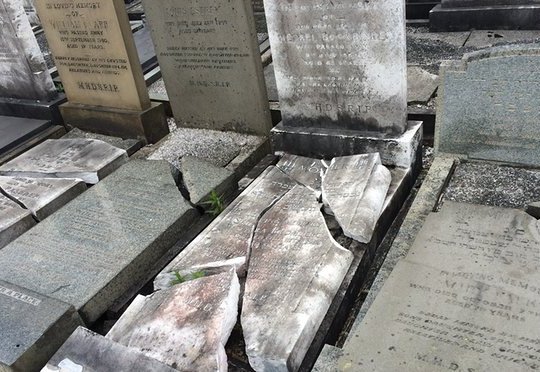

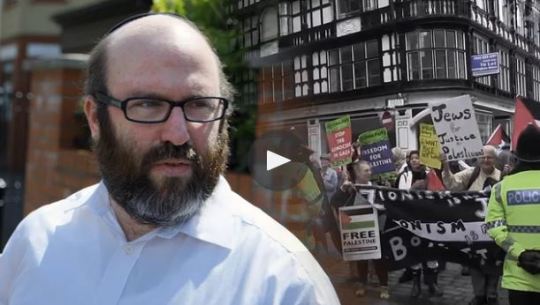


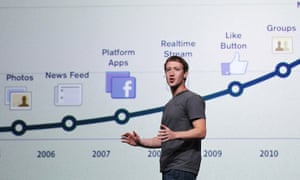


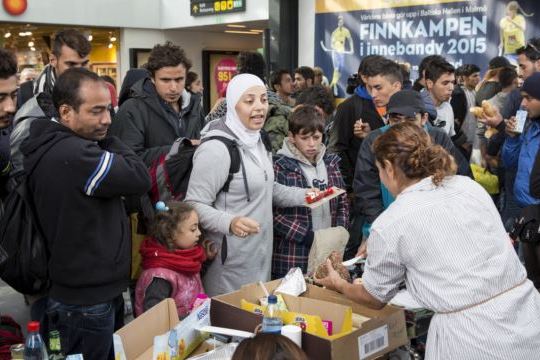
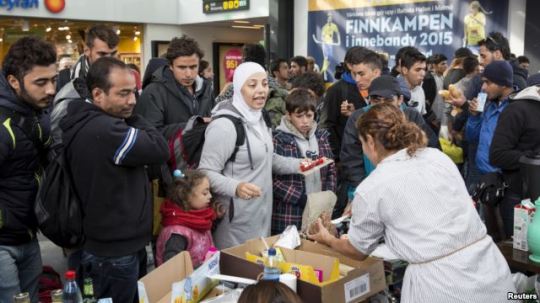
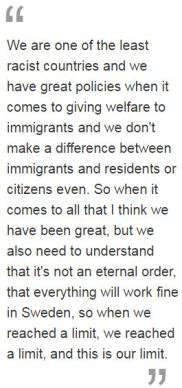 last year, we have received more than 100,000 refugees. As you may have seen here in our community, we have very few apartments, we don’t see a growth of jobs enough to employ all those coming…. We cannot in such a short period of time take care of so many people, our system cannot handle this,” Aberg says.
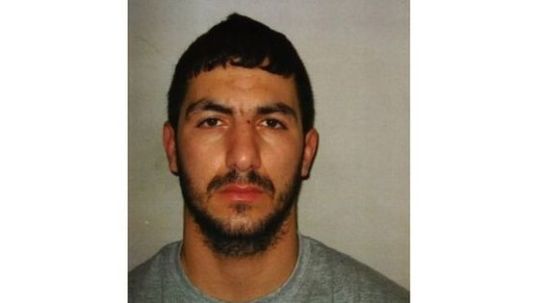

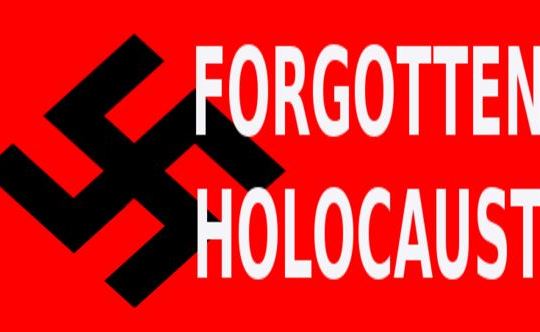


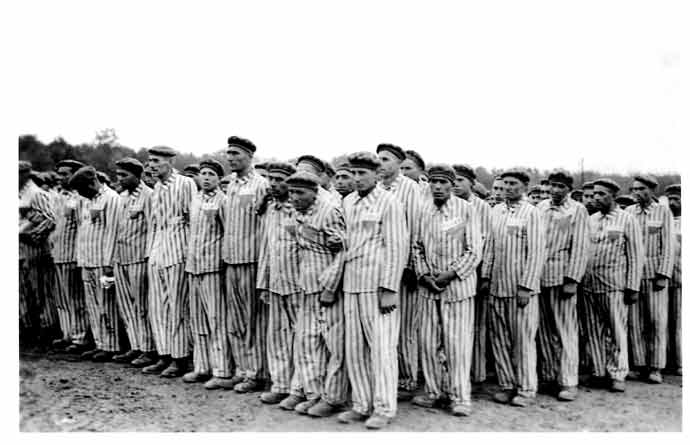
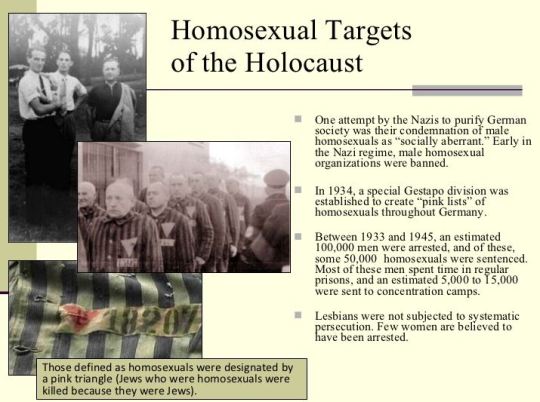
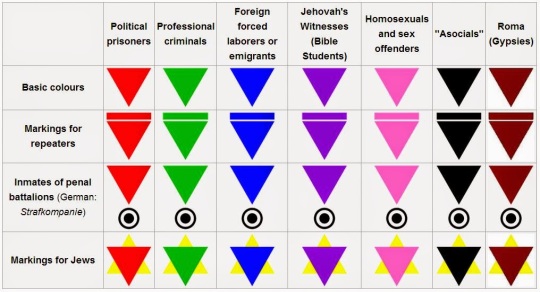
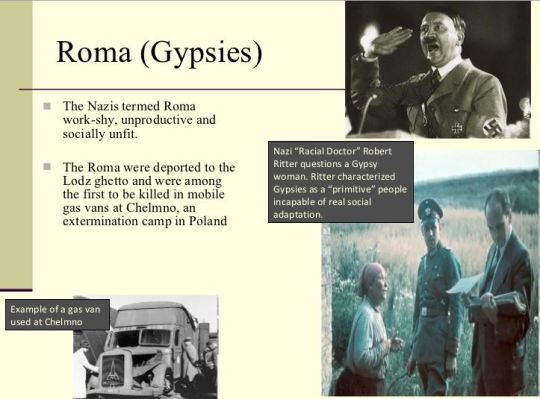
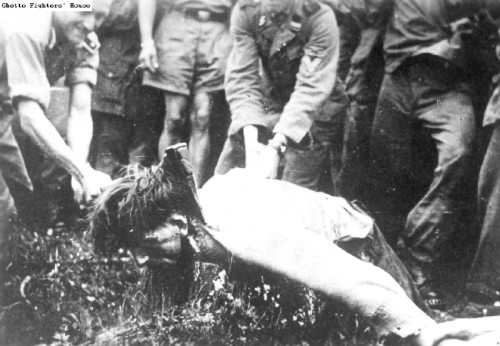

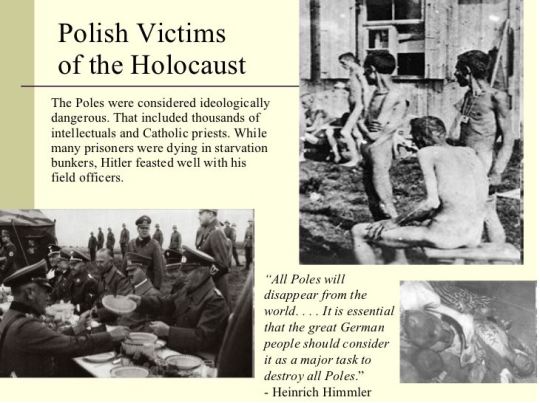
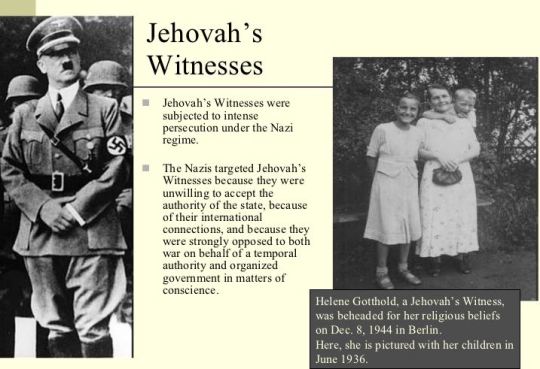
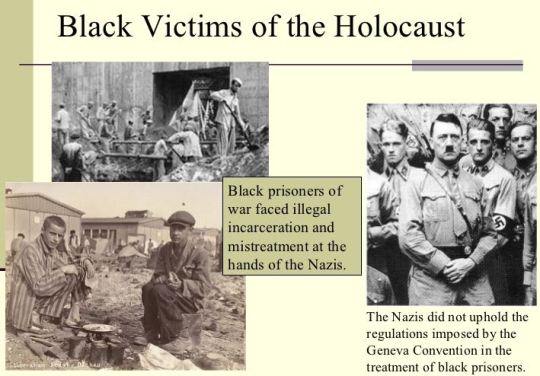







 ~~Defender of Faith~Guardian of Truth~~